First-hand · verified against the real thing
The phone speaker that went quiet: pocket lint, not volume settings, is usually the culprit
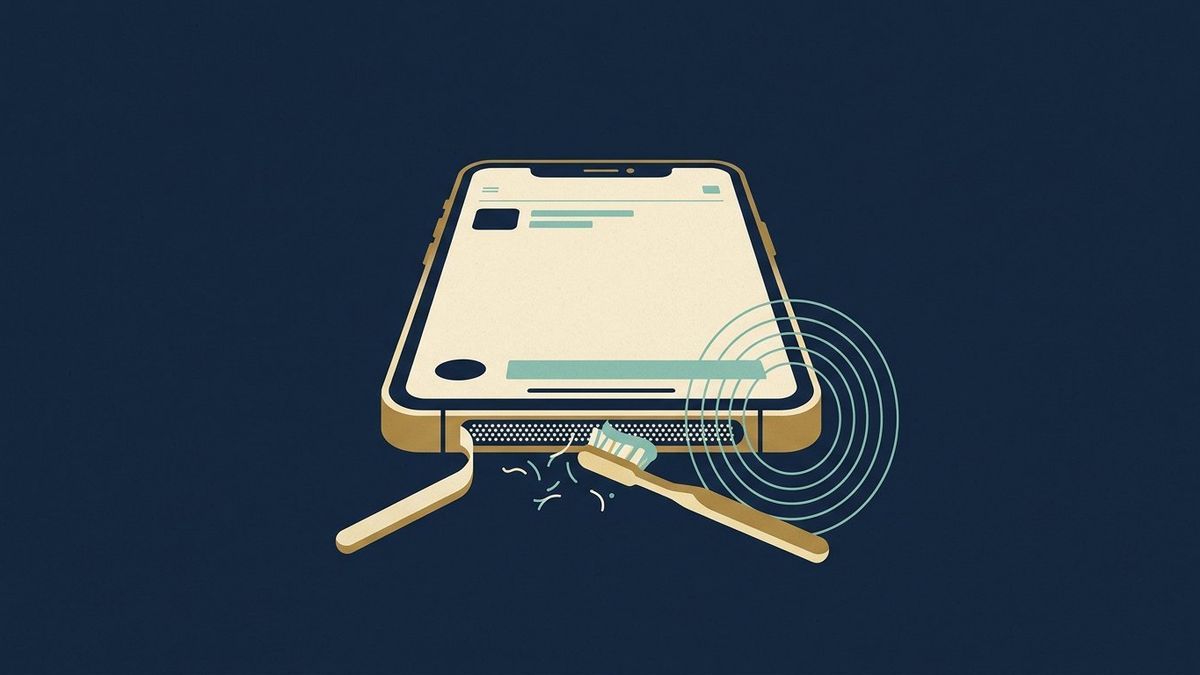
In one line: The torch-and-brush ritual that fixes most muffled speakers, why water-eject apps are theatre, and the one pattern that means a repair shop.
Phone speakers rarely die quietly - they muffle slowly, and almost nobody blames the actual cause. The grille over every speaker is a mesh fine enough to block dust but not water, and a pocket carries a ready supply of packed lint. Six months of that turns the mesh into felt, and a felt grille turns a loudspeaker into a whisper. Before any settings tour or any repair bill, the whole diagnosis is: shine a torch on the grille and look.
The five-minute clean that fixes most of it
- Brush, don't dig. A clean, dry, soft-bristled toothbrush held flat against the grille and swept sideways across it - not perpendicular into it - walks the lint mat out in strokes. A wooden toothpick is for the earpiece slot only, with no force; a metal pin is how you punch a new hole in an otherwise fine mesh.
- Sticky, not wet. Damp the brush bristles in isopropyl alcohol - never squirt it into the port - and brush while damp to lift oily grime the dry pass leaves behind. The phone stays face-down on a cloth while it dries, which takes minutes.
- The tape pass for the mesh. Press - do not rub - a strip of low-tack tape (masking tape, the good sticky side) onto the dry grille and pull: it lifts what the brush loosened but the mesh still holds. Repeat until a fresh strip comes away clean.
- Compressed air is the one tool to distrust. Short bursts only, from a distance, nozzle never touching the grille - a full blast at close range can drive lint deeper or, worse, chills and wets the mesh with propellant. Phone makers warn about this for good reason.
The checks after the clean, because one sound pattern means more than lint
Play the same voice memo before and after with the volume at half, and put your ear near the grille: a clean, loud repeat means the job is done. Still muffled on speakerphone calls but fine on music means the earpiece - the slit above the screen - needs the same ritual. One specific pattern is not a lint story at all: crackle or silence on one speaker only, present since a drop or a swim, usually means a torn membrane or a connector jarred loose, and that is a repair-bench outcome the brush cannot reach. Ringtones through the headphone path are a software story (silent-mode toggles, bluetooth still parked on a speaker in the other room) - which is exactly the pattern where the torch shows a perfectly clean grille; when the mesh is clean, stop brushing and read the settings instead.
Why water-eject apps and rice mostly miss
The "sonar" speaker apps buzz the cone hard enough to shake out a film of water right after a splash, and if the muffle started after real water, a minute of that plus face-down air-drying genuinely helps - but they do nothing for compacted lint, which is ninety percent of the cases they get praised for. Rice is for the drowned phone's interior (or rather, for doing nothing at all while you should be leaving it open, powered off, and in airflow); neither the grain nor the app reaches a mesh full of pocket fluff. And once a month, with the phone out of the jeans pocket on laundry night, the brush pass takes ten seconds: lint is a habit to break, not a wound to treat.
Next