First-hand · verified against the real thing
Foggy phone photos: the lens film nobody sees, and the difference from a real crack
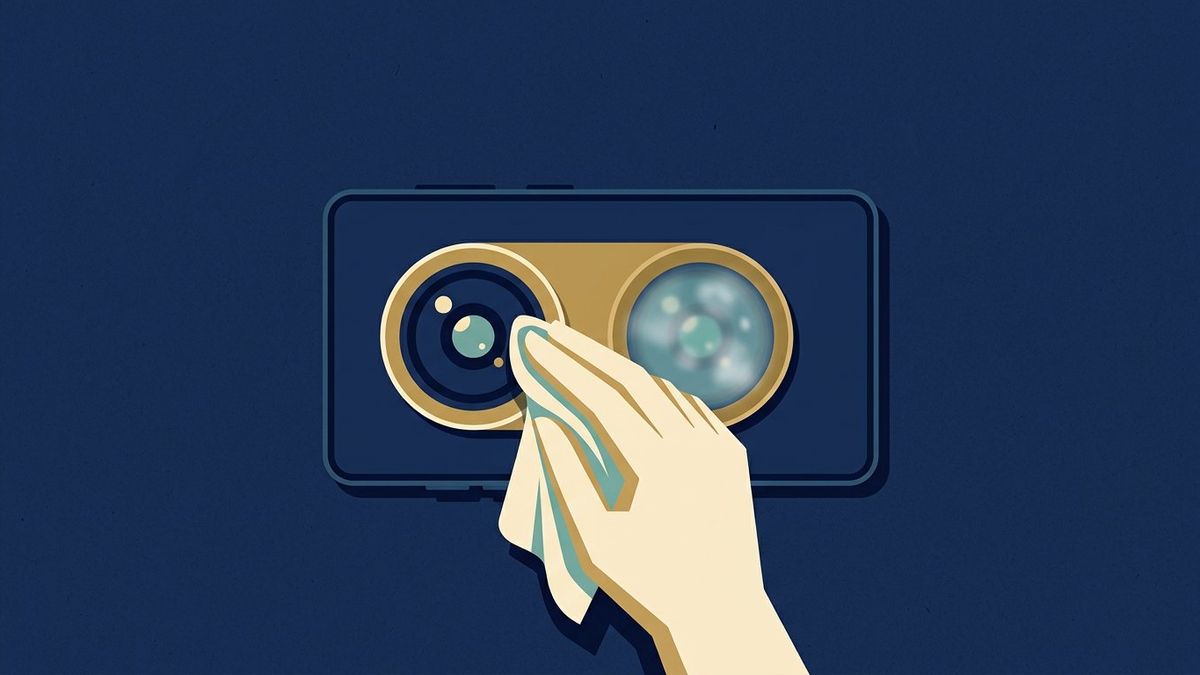
In one line: Why streetlights bloom into haloes, the twenty-second clean that beats every 'restore' app, and when the camera glass - not the camera - is the diagnosis.
Open the camera and the night looks like it was shot through a shower door: every lamp wears a halo, the whole frame has a low-contrast grey lift, and "it just feels soft" becomes a shop visit where the wrong part is quoted. The most common cause is neither camera nor software - it is a film of skin oil on the outer glass, and the fix costs twenty seconds and a cloth.
The diagnosis ladder, before buying anything
- Wipe first, properly: a microfibre cloth (the glasses one) with a breath of moisture, one face, then the other - a dry T-shirt on a dusty lens is sandpaper roulette, and the scratch it adds is the one haze that cleaning can't undo. For the ring of grime in the case's cutout: the case off, a dry brush around the bezel edge, because that dark halo around photos is lint acting like a sunshade.
- The lamp test for a scratch: tilt the phone under a bright light and look at the glass, not through it - a real scratch throws a hard, thin rainbow that stays at one spot; oil film looks like a smudge that moves when you wipe. If the spot survives cleaning and grows into a star in night shots, the coating or the glass is damaged, not dirty.
- The both-cameras check: haze on the wide and the tele lens that no wipe touches is rarely two cameras dying together - it is usually the outer glass assembly fogging internally (a cracked seal after a drop admits humidity, and the condensation film sits between the glass and the sensor). The wipe-proof halo with a recent drop history belongs to this diagnosis.
The economics, because the shop will quote the wrong thing
On most phones the camera glass is a separate part from the camera module - the lens window is glued in a bezel, and the replacement is a screen-repair shop's fifteen-minute job at a fraction of the "new camera" quote that assumes the whole module died with the scratch. Ask the bench which part they mean, by name. The app-store "camera sharpener" and every "fix the blur" utility, meanwhile, can only resharpen and denoise around optical haze - they cannot subtract the oil; they make the smudge softer, which is its own look. If the haze is internal and the phone is out of warranty, the desk's honest triage: live with it for daylight, swap the glass for the night shots, and never pay camera-module money for a window problem unless the module test proves it.
Prevention, in two sentences that are actually the article
A case with a raised lip over the lens stops most of the pocket abrasion, and the monthly ten-second wipe - cloth, breath, both faces - keeps the oil from curing into the coating's micro-etch that turns a film into a fog. Every camera glass that has been "suddenly awful for weeks" in this desk's experience went back to new in the time it took the owner to stop downloading apps and start wiping.
Next