First-hand · verified against the real thing
Powerline adapters: the wiring <i>is</i> the network - and that's the catch
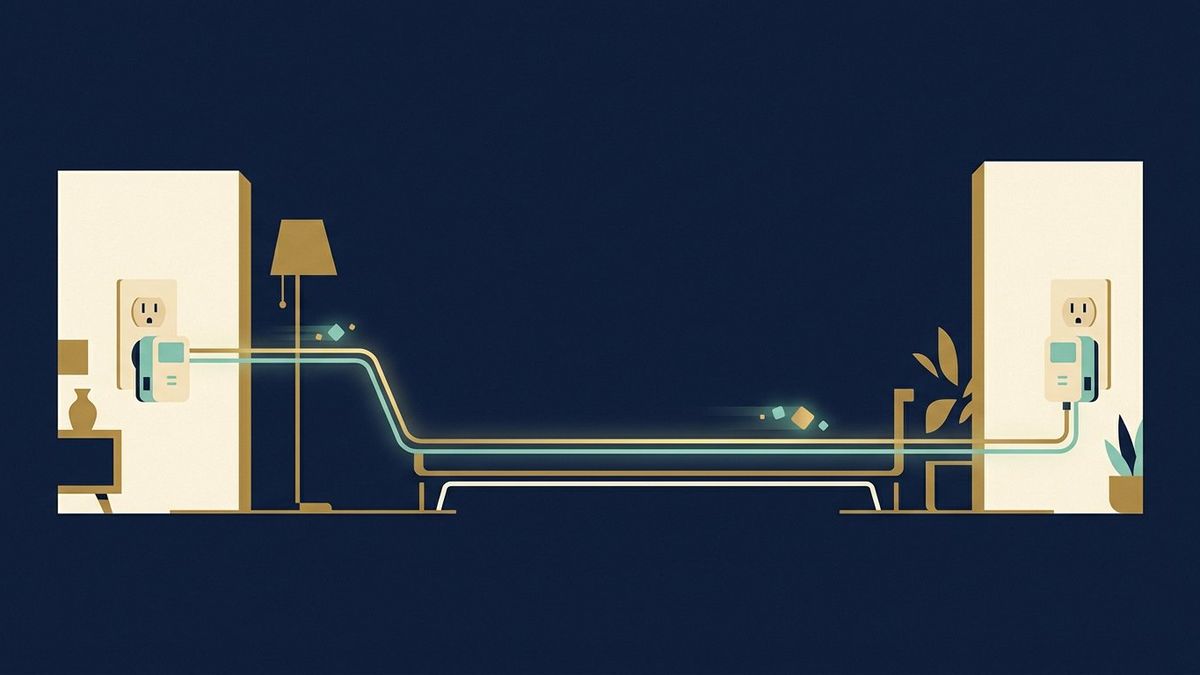
In one line: Why the same kit flies in one flat and dies across a room in another, the meter and phase traps, the socket rules the box doesn't print, and when to give up and cable.
Powerline networking sells the dreamiest sentence in home IT - no new cables, just the wires you have - and it is a genuinely clever technology applied to the messiest medium in the house: a wiring system designed to move 50Hz current while somebody's cheap charger screams noise into it at radio frequencies. The kit works exactly as well as the wiring under the plaster, which is why one home's 300 Mbps feels like a gift and the next flat's 40 Mbps feels like fraud.
The physics, in the two rules that decide everything
- Same meter, always: the signal does not cross an electricity meter - two adapters on separate meters (a landlord's flat and the boys' quarters) are in two networks and pairing will fail or scream across. The desk files this under buying, not troubleshooting: check the meter first.
- Phases are hills, not walls: inside one meter, a house's three-phase supply means the two legs meet at the breaker panel, and the signal crosses through that - with real loss, more on old panels with dampers and filters. Two rooms on the same phase can beat a new ethernet cable's usability; two far phases in 1970s aluminium wiring can defeat the box entirely.
The socket rules that decide the day, because the adapter will not tell you
Plug adapters straight into the wall - a surge strip, extension lead or UPS is a filter designed to strangle exactly this kind of high-frequency noise, and it strangles the signal with it; a fused spur with a neon or a switch with an electronic dimmer on the same circuit is the same story told smaller. Keep the two adapters off heavy-noise neighbours on a shared circuit: cheap phone chargers, LED drivers and a fridge's compressor are the local FM station that drowns you - the adapter's rate dropping at kitchen peak hour is that band, not the fridge. Pair the set on the same panel before the long run, then measure where the traffic lives (the vendor app's Mbps between the pair, not the speedtest, is the honest number). And the marketing ceiling: a "1300" kit at the socket a metre away is a lab rate; in a house with the stars aligned, real throughput lands in the 100-300 Mbps class with a latency penalty under load - which is plenty for TV streams and working files, and not what a competitive shooter will thank you for.
The alternatives ladder, honestly ranked
Old wiring, long distance, thin plaster? The desk's order of trials: move both adapters to circuits that share the panel's middle rooms (phase roulette can pay), swap the pair for a newer G.hn-generation set only if the current pair is old AV500-class tech, then the flat under-carpet ethernet cable at market money with real numbers at the end of it - then, if the house is two-storey and thick, the mesh-with-wired-backhaul decision the extender guide already argues. Powerline earns its keep in exactly one situation the ladder above keeps pointing at: the one room, on the same meter, that Wi-Fi cannot reach and cable cannot reach neatly. In that room it is a small miracle; on the listing page it is a lottery ticket.
Next