Maintain it · practical guide
Doors that won't meet: the three-screw map of the modern cabinet hinge
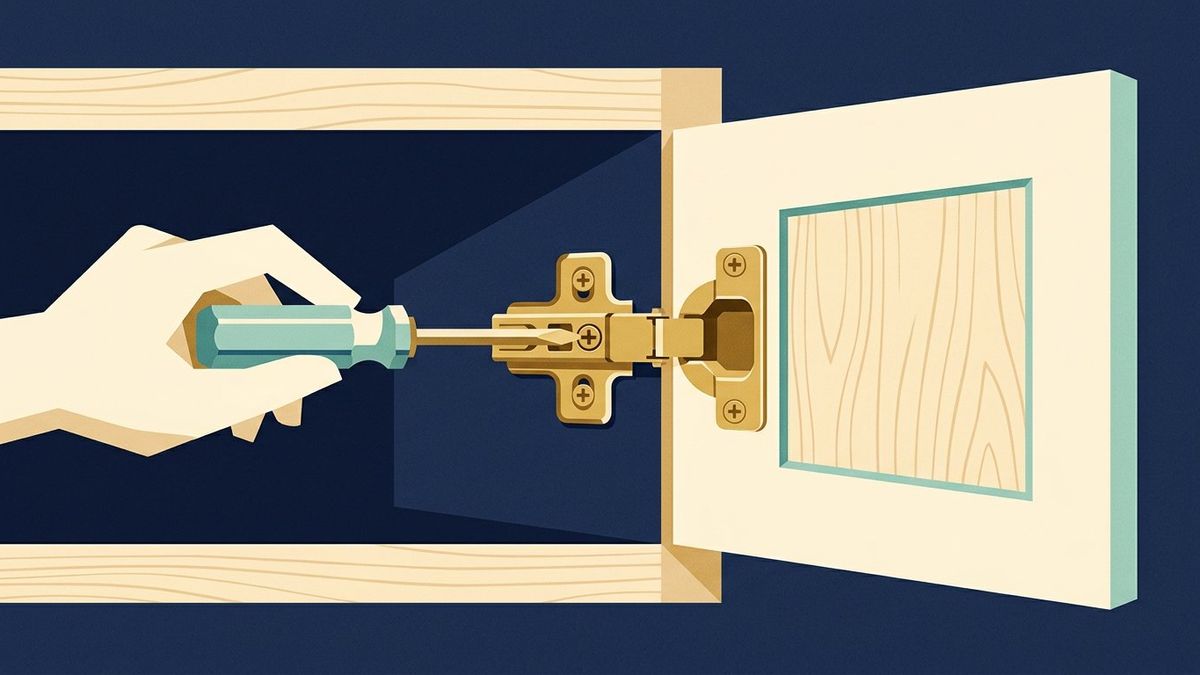
In one line: Which adjustment does what on a soft-close cup hinge, the order the installers actually work in, and the two faults that aren't the hinge.
Sagging kitchen doors are almost always the same fault in different clothes: a hinge has slipped or a damper has tired, and the gap lines that make a kitchen look fitted are set by a mechanism with three named adjustments, all reachable with a single screwdriver. This is the installer's method, in the order they use it.
The map of the three screws
Modern cabinets use the 35mm cup hinge: a two-plate affair - the cup fixed to the door, the mounting plate clipped or screwed to the cabinet wall - and the plates overlap at two lock screws and one or three adjustment screws. Turn them and the door moves in exactly three directions: in/out (the frontmost screw on most plates - how hard the door closes onto the case; one full turn is about two millimetres), left/right (the rear adjustment - the gap between doors and whether they rub), and up/down (loosen the fixing screws, the plate slides in its oval slots, re-tighten). Every combination of "my doors look awful" is these three: the desk's rule that ends arguments at both ends of a run is to set the closing gaps before the looks - all doors in to just kiss the frames, then walk around opening and closing two at a time, backing one quarter-turn where a gap wants narrowing.
When the hardware is the fault, and when the cabinet is
- Soft-close that stops working: the damper is a piston in the cup or a clip-on cartridge; it either pulls the last 10 degrees or it does nothing - fluid ages faster in a hot kitchen, and the replacement is a same-bore cup swap that's cheaper than the drama of "new doors". Slammed-soft-closed doors usually mean a tired cartridge before a broken anything else.
- Stripped fixing holes: the classic sag of a door on a thin particle-board front. The hinge plate's screws pull out, the slots widen, and no amount of adjustment holds. The old repair still wins: pull the screws, pack the holes with glued toothpicks or hardwood dowels, let them set an hour, drive the screws back into fresh wood - the door is fitted again for years - and if the board itself is crumbled, a new mounting plate position, drilled solid into clean material, is the alternative the fitter reaches for.
- Two things the hinge cannot fix: a cabinet racked out of square (the diagonal corner-to-corner tape measurements differ - a shifting case, a missing wall clip, or a floor that moved; the remedy is under the carcase, not on the door), and a swollen door edge - in humid kitchens, check where the paint has failed at the edge and the timber is drinking; re-seal before adjusting, and the hinge gets blamed for a door that has grown a millimetre.
The five-minute sequence, written to be followed
Clear the counter, take the doors' contents out so weights don't lie to you, loosen the mount plate fixing screws a quarter, set every hinge's in/out screw to the same mid-position, re-tighten - then one pair of doors at a time, gaps first, rub second, eyes along the line of the run at the end. Small turns: the hinge amplifies everything, which is also the final warning - quarter-turns, test the close, and leave the last eighth of perfection to the day's second coffee, because a hinge fought past its middle position comes back tomorrow worse than the first sag.
Next
Related on this desk.
General information, not professional advice. Homes differ — if a job is beyond your confidence or the guide’s boundary, that is what tradespeople are for.