Maintain it · practical guide
Scrubbing in the ceiling at 3am, chewed cables: closing the rat route into your house
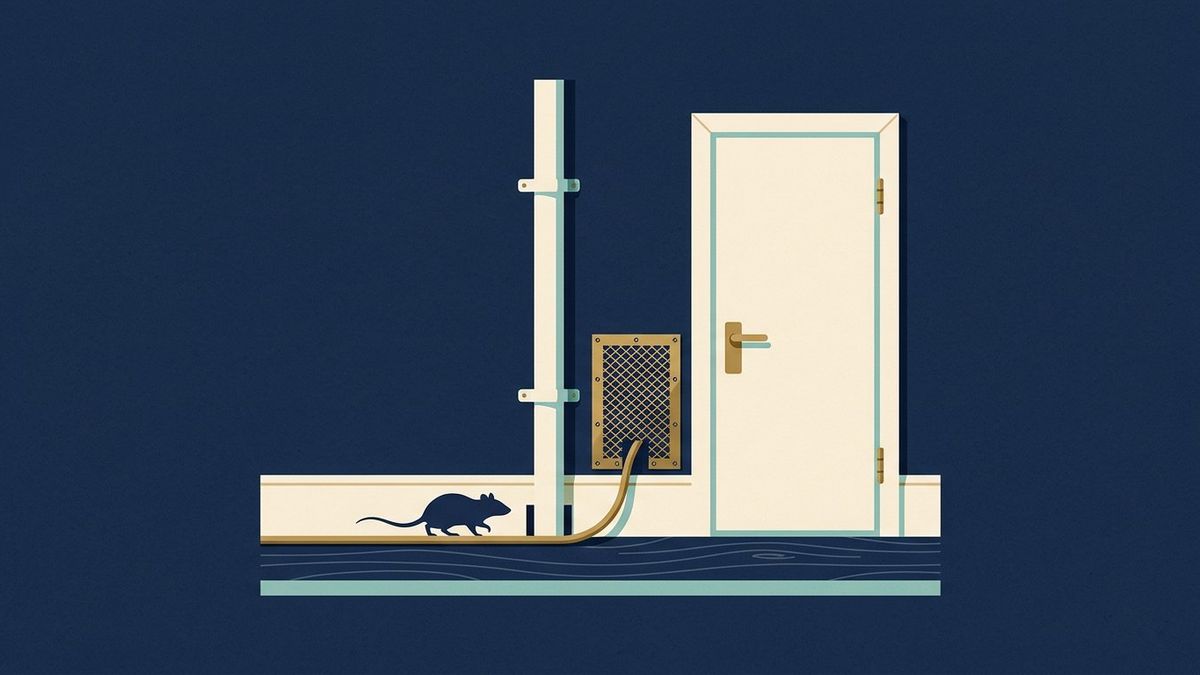
In one line: Why they come up, the five holes that let them in, the steel-wool-and-sealant rule, and why traps beat poison for anything living above your head.
Rat noise in a ceiling is the sound of an invitation having been accepted - and the acceptance was structural, not behavioural. Rats enter houses through measured, findable holes; the entire practice is: remove the three things they came for (food, water, safe route), then physically close the road, because poison and traps manage the ones inside while the holes guarantee next month's batch.
Where they actually come in
Everything on this list is smaller than people believe - a thumb can push through a gap that will admit an entire rat, so "there was no hole" means "the hole was a finger's width and I did not count it": pipe collars where waste pipes enter walls and the slab - they are always gap-fitted loosely, that is the entry; under external doors, especially the back-kitchen and boys'-quarters thresholds; soffit and ventilation openings without intact mesh; AC sleeves and cable sleeves bored through walls and left open around the pipe; and the drain line itself - roof drain, the vent stub, a cracked junction - which is why one ceiling rat is often a plumbing photo before it is a pest-control visit.
Close it the right way
Foam alone is a rat snack. The working recipe is steel wool or copper mesh stuffed into the gap, then sealant or mortar over it - they cannot chew packed metal; where mesh is unavailable, a mortar pad with a handful of broken glass mixed in is the old tradesman's version and it still works. Mesh on every vent, a brush strip under doors, collars re-sealed from both sides where the wall allows. Do the whole list in one weekend; half-closed holes just move the problem to the neighbour's side of the same gap.
The inside population, humanely and honestly
Inside the house, traps beat poison for one boring reason: a poisoned rat dies in your ceiling, and the smell-week of a carcass in a roof void is the punishment - and it can mummify for months. Bucket traps and snap boards along the runways (rats hug walls, they do not cross open floors; the droppings show you the runway), unset for two days so the trail trust re-establishes, baited with peanut butter over anything food-market. For ceiling access without a false floor: that is a professional with a torch and a ladder, not a ladder-yourself-after-dark job. Then the reasons they came: bin lids that close, pet food in metal not plastic and never left down overnight, fallen fruit and compost distance from the wall, and the generator bay - the chewed earth lead and the nest in the air filter housing are this city's standard rat invoices; a can of engine underbay spray and a tidy bay are cheap insurance.
The check that ends the story
Forty nights after closing the last hole: no fresh droppings - rat droppings dry and crumble with age, while a day-old one is glossy, which is the forensic test the professionals run with a swept floor line - no scrubbing at 3am, no chew marks on the tape at each pipe collar (the putty-dab trick: a pea of soft putty on the gap, intact in the morning means the hole is history). Holes stay closed, bins stay covered, and the ceiling is quiet. That is the whole system - structural, patient, and finished.
Next
Related on this desk.
General information, not professional advice. Homes differ — if a job is beyond your confidence or the guide’s boundary, that is what tradespeople are for.