Fix it · practical guide
The cistern that never stops filling: the dye test, the tired flap, and the twenty-minute fix
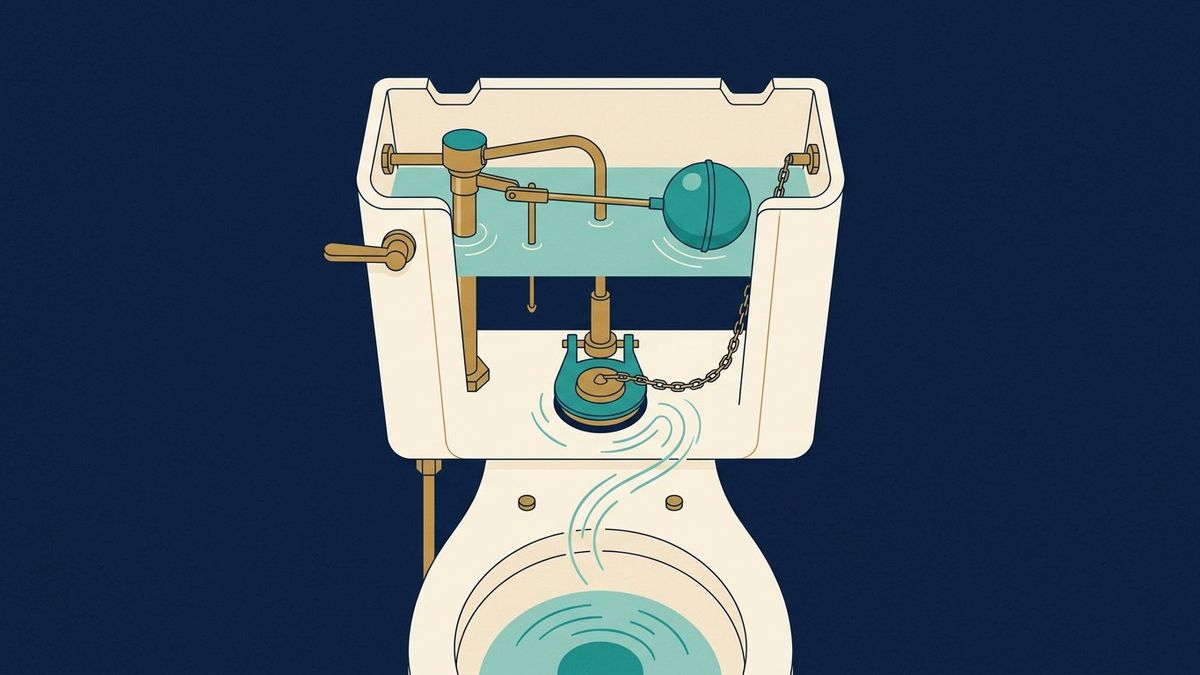
In one line: How to hear which part is guilty, the two universal cheap parts that cover almost every running toilet, and the meter trick that proves the leak you cannot see.
A toilet that keeps running is not "just a sound" - a cistern with a tired flap can move hundreds of litres a day into the drain without ever visibly overflowing, and the fix is one of the two or three genuinely satisfying half-hour jobs in house maintenance. Everything below assumes the thing you hear: the refill cycling, a hiss, or a trickle into the bowl that never stops.
Step one: prove it, and prove which one
- The dye test: food colouring (or a dark tea bag) into the cistern, no flush, ten minutes. Colour in the bowl = the flap/flush-valve seal is leaking - water sliding past a tired seal into the bowl. No colour = the cistern is overfilling: the water level is above the overflow pipe, so it drains away continuously, and the culprit is the fill-valve height or a worn fill diaphragm.
- The meter: everything off, note the meter, an hour, note it again - movement with no taps open is your invisible-leak invoice, toilet first on the suspicion list because it is the only fixture with an open drain.
The twenty-minute repair, in order
Close the angle valve, flush to empty, and take the old flap with you to the market/plumbing shop - flap sizes are a drawer of lookalikes and the physical sample beats every measurement. Fit the new flap, adjust the chain so the flap lies flat with a knuckle of slack - a chain too short holds the flap open by a millimetre and looks like a new leak the same day. If the dye said overfill: clip the float down so the water stops an inch below the overflow top, and if the hiss continues after that, the fill valve's diaphragm (or the whole valve, they are cheap and one-size-fits-most) is next. That is the entire repair: two universal parts, a screwdriver, and a bucket for the last cup of cistern water.
The checks that stop the callback
Before closing up: a line of new colour in the bowl should now be impossible - dye stays in the cistern. Then crack the angle valve back fully (half-closed valves hiss and mask slow leaks), and press the flush button gently twice - dual-flush mechanisms that feel gritty or stick halfway are the third common culprit, and their button spindles adjust with a twist, not a replacement. If the toilet still runs after fresh flap and adjusted level: the overflow tube itself is cracked - rare, cheap, and the last thing on the list because it means emptying the cistern twice.
Next
Related on this desk.
General information, not professional advice. Homes differ — if a job is beyond your confidence or the guide’s boundary, that is what tradespeople are for.