Maintain it · practical guide
The machine that makes clean laundry smell: the gasket fold, the hidden filter, the hot wash
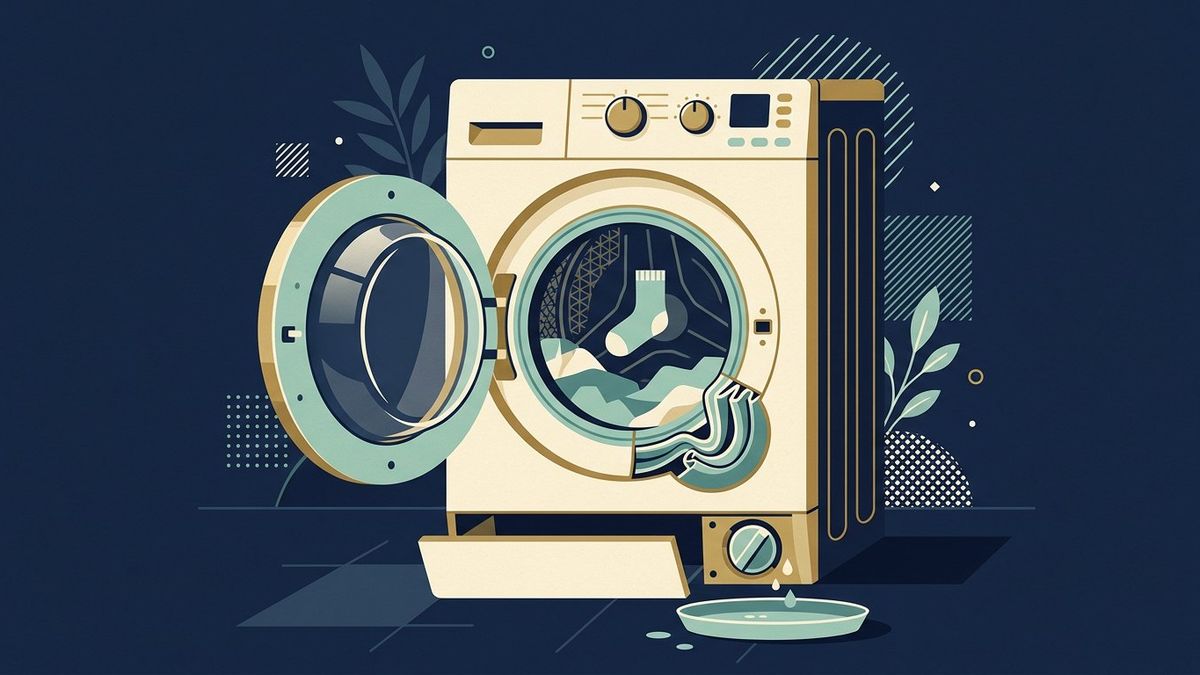
In one line: What the slime under the door seal actually is, where the drain filter hides, why more detergent makes it worse, and the monthly ten-minute routine.
The modern front-loader washes better and smells worse by design: it seals like a pressure cooker to save water, and everything the clothes give up - lint, skin, fabric softener fat - stays inside with it. The sour note on clean laundry is not the water and not the clothes; it is a thin biofilm on rubber the machine keeps warm and damp, and the fix is boring enough to actually work.
The gasket fold, the drawer, and the thing under the kick panel
- The fold: pull the door seal's inner lip open with two fingers - the grey-green lining of every smelly machine lives here, with a wire rope running through it that must stay seated. Wipe after every wash (ten seconds), and leave the door and detergent drawer ajar between loads; the closed, dark, damp box is the whole growing condition, and the little door you snap shut "to keep the cat out" is the reason you are reading this.
- The drawer: pull it out fully - the upper channel grows black fungus from softener's fat, which rinses nowhere. Old toothbrush, hot water, drawer out to dry overnight; softener diluted, or discontinued, or in a ball in the drum instead of the drawer. This one component causes an unreasonable share of "the machine itself smells" reports.
- The filter: behind the small hatch at the machine's bottom front - a shallow flood basin (towels, a jug lip), unscrew the plastic cap slowly, clean out the coins, hairclips and felt of a year, check the little impeller spins free, refit tight. Every two months. The machine that won't drain or leaves wet socks is usually just this, and the plumber call starts at the drain filter and ends there.
The hot-wash discipline, and why less soap is more
Once a month, empty drum, hottest cycle the machine offers, and either a machine cleaner per its label or a cup of citric acid down the drum - it strips the fat film the daily wipe doesn't reach. Vinegar works as a milder version; nothing beats the heat of the rinse more than it beats the drum's seals, so strong bleach cocktails monthly age the rubber you are trying to save. Then the habit at the till: modern detergent is formulated for soft water and half the amount the cap's lines suggest, because suds that don't rinse away become next month's smell - the "extra cap for extra dirty" instinct is literally feeding the biofilm. Hard-water households get one more line: scale in the heater makes washes lukewarm even on the hot setting, which feels hygienic and grows bacteria anyway - the descaler discussion belongs with the kettle, and the same water applies here.
The smells that mean something else
These are the diagnoses, not the cleaning: a burning smell during spin - belt or motor, unplug and bench; sewage into the room when the pump runs - the drain hose is pushed flush into a standpipe without its air gap, so every pump siphons the drain's own odour up into the drum - pull it back so the end stands above the trap, and the smell leaves with it; and a drum that smells fine but clothes come out sour - that is not the machine, it is a load left wet in the drum for hours, the one smell no maintenance routine forgives, least of all the sports kit.
Next
Related on this desk.
General information, not professional advice. Homes differ — if a job is beyond your confidence or the guide’s boundary, that is what tradespeople are for.