Fix it · practical guide
The tap that will not stop dripping: the ten-minute cartridge job
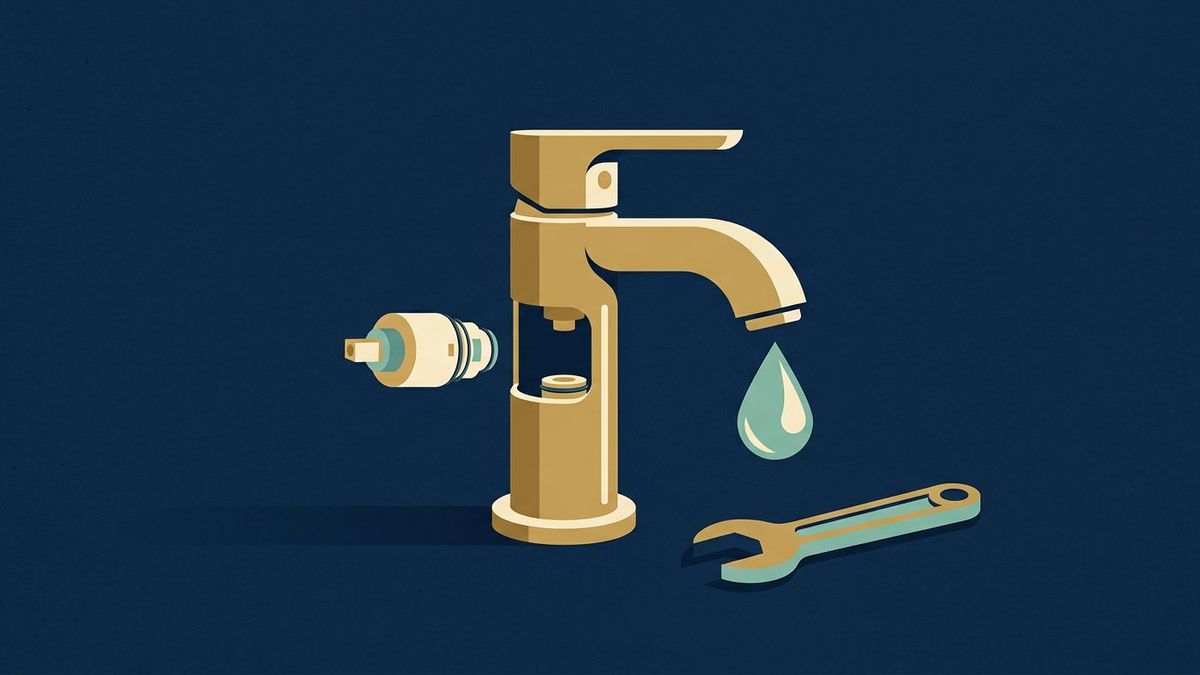
In one line: How to tell which washer or cartridge it is from a photo, the isolation-valve dance, and the one scrub that stops a re-drip next month.
A drip is not a leak to fear, it is a repair to schedule - the cost is the sound and the litres, and the job is one of the two genuinely satisfying plumbing fixes a homeowner can finish before lunch. Ceramic cartridges and rubber washers: most taps on most sinks are one or the other, the part is standard-ish, and the whole difference between the two is which half of the tap comes out.
Know the tap before the market run
- Quarter-turn taps (lever or small-handle that flicks to full in 90 degrees) run on a ceramic cartridge - a small plastic-and-rubber tower with two holes. Their failure is the seat washer face wearing or the O-rings hardening: a steady drip from the spout when off, and eventually a stiff handle. The fix is the cartridge, and it is exactly the part it looks like.
- Multi-turn taps (the classic that takes two twists to shut) press a rubber washer onto a seat when closing. They drip between seats - a tap that runs until you push the knob firm is this - and the washer kit that costs what a bread loaf costs is the whole part.
- The photo trick: the market has every size and none of the names. Old part on a coin or key ring for scale, shot from the side and top, and the seller matches it in three seconds - better than any description you could type. Bring both halves if a stem unscrews from a body.
The ten minutes, in order
- Close the isolation valve under the sink (the little tap on the pipe, clockwise to shut), then open the tap to drain the line; if there is no isolator - older walls often skip them - the mains or the tank valve becomes step one, and that is worth knowing before a spanner appears.
- Cap off the drain or block it with a wet cloth - the one horror every tap guide earns its stripes telling you about is a captive screw going down the waste. Lay a towel over the basin; porcelain and dropped spanners do not negotiate.
- Remove the handle - usually a grub screw under the decorative cap (a knife edge or a bit of tape lifts the cap without marking it), some modern levers pull off straight after the set screw is slack.
- Unscrew the shroud, then the retaining nut; pull the cartridge or the tap washer seat, note which way the cartridge's flat faces (or photograph it), clean the inside of the body - here is the re-drip stopper: a ten-second scrub of the brass cavity with an old toothbrush removes the grit that scores new ceramic faces, which is the whole cause of "fixed it twice, same month".
- New part in, snug not brutal (overtightening cracks the plastic towers), reassemble, crack the isolator, then the tap, and check the joins with the basin dry and a torch - a weeping shroud thread at full pressure is the 2 a.m. version of this job otherwise.
The parts that mean you are done for today
If the seat inside the body is grooved or pitted - run a fingernail across it, a catch is the tell - a new washer will drip on it because water follows the scratch. A seat re-cutting tool is the one purchase that makes the job permanent (or the tap body itself, which is still cheaper than what the plumber's invoice would call "the tap's advice"). And the mixer-tap variant: single-lever mixers use a bigger cartridge, the same quarter-turn logic, and often a 35 or 40 mm tower in two brands of spline - the photo trick matters most here, because mixer cartridges have incompatible personalities. The closing honesty, since this is a safety site: this page covers the tap you can reach under a sink with a towel and a torch. The wall itself, the first tee, or anything that needs cutting a pipe - that is the licensed person's half of the boundary the desk keeps drawing.
Next
Related on this desk.
General information, not professional advice. Homes differ — if a job is beyond your confidence or the guide’s boundary, that is what tradespeople are for.