Maintain it · practical guide
The iron that spits brown: the tank flush, the soleplate strip, the cool-time habit
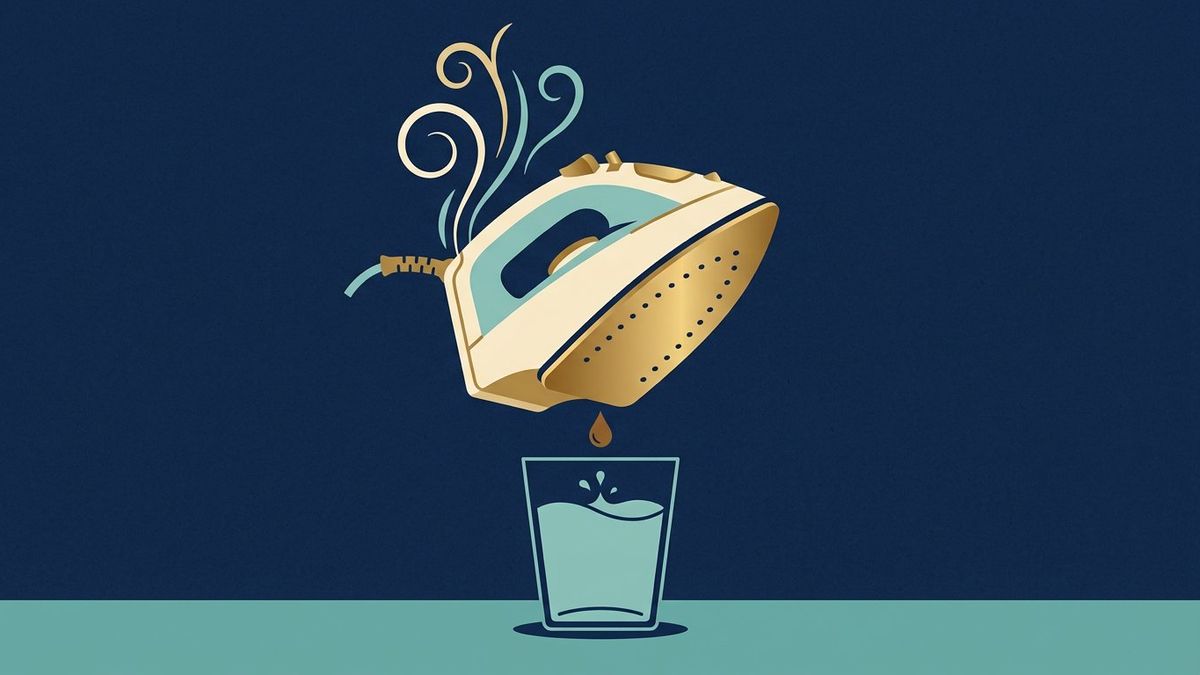
In one line: What the brown water actually is, the vinegar truth nobody prints on the bottle, and the two habits that end spitting and scorch both.
Every press session ends the same way when the iron has been neglected: a brown freckle on the clean side of a shirt, a spitting hiss where steam should be, or the shine marks that no detergent caused. The iron is a small kettle with a very personal relationship to its water, and the maintenance is two routines, each under ten minutes, that fix every symptom on this page.
What the brown water is, and what dissolves it
The tank's brown is scale - the minerals your water carries, baked onto the heater and shaken loose as flakes - and on irons with a self-clean function the manual is at least honest about it: the button exists to flush those deposits, so use it over a sink with the tank half-full warm, not hot, holding the iron over the basin like a small explosive event. For the ones without a button, the standing recipe is a splash of white vinegar in the tank, heated, steamed hard over a towel, then the same with clean water - the rinse pass is the step that prevents tomorrow's vinegar shirts - and the desk's caveat for the brand-purists: a soak in undiluted anything (vinegar included) is where the internal seals are quietly thanked by the warranty department, so keep it dilute and keep the rinse. The soleplate's brown is a different film entirely: synthesised starch and scorch carbon from touching a shirt too hot, and that comes off with the iron warm, not cold: a paste of bicarb and a few drops of water, rub with a soft cloth, wipe clean, and the old paraffin trick your mother's press used before non-stick plates - skip it here, the coatings don't want it.
The two habits that end it before it starts
- Empty the tank at cool-down, every time. A dry tank has no water to bake scale and nothing left to grow the stale-water spit - this single habit removes most of the brown-water world, which is why every engineer who services irons says it first and every manual buries it last.
- Heat to the fabric, not to the iron: scorch marks are what happens when a synthetic setting is "just to make sure" on cotton - the thermostat's job is the fabric's limit, and the steam burst on the high settings is the iron asking the shirt a question the fabric can't answer. Nylon first, cotton last, and the dial back down when you stop to fold.
The ones that mean the iron is done
Water finding its way out of the soleplate's seams under pressure, or an auto-cutoff that cuts the element every session at a random minute, are internal gasket and thermostat failures - and the honest repair maths on a steam iron, which is the buying pages' "fix versus replace" in one line: a full strip-down for either fault is the price of a good new iron, minus the brown-water routine that would have made either one unnecessary.
Next
Related on this desk.
General information, not professional advice. Homes differ — if a job is beyond your confidence or the guide’s boundary, that is what tradespeople are for.