Evidence-aware · beginner-first · no miracle claims
Conditioning, taught: 13 heart-pumping moves
In one line: Marching, jacks, climbers, ropes and stairs - cardio you can do in a living room, no treadmill required.
Conditioning is the third pillar: strength makes you capable, and conditioning makes you tireless. You do not need a treadmill - you need sixty seconds and a patch of floor. These ten moves scale from a gentle march to genuinely hard intervals.
Use them three ways: as a warm-up before strength work, as finishers after it, or as standalone 15-20 minute sessions when a full workout is not happening today.
Marching in place
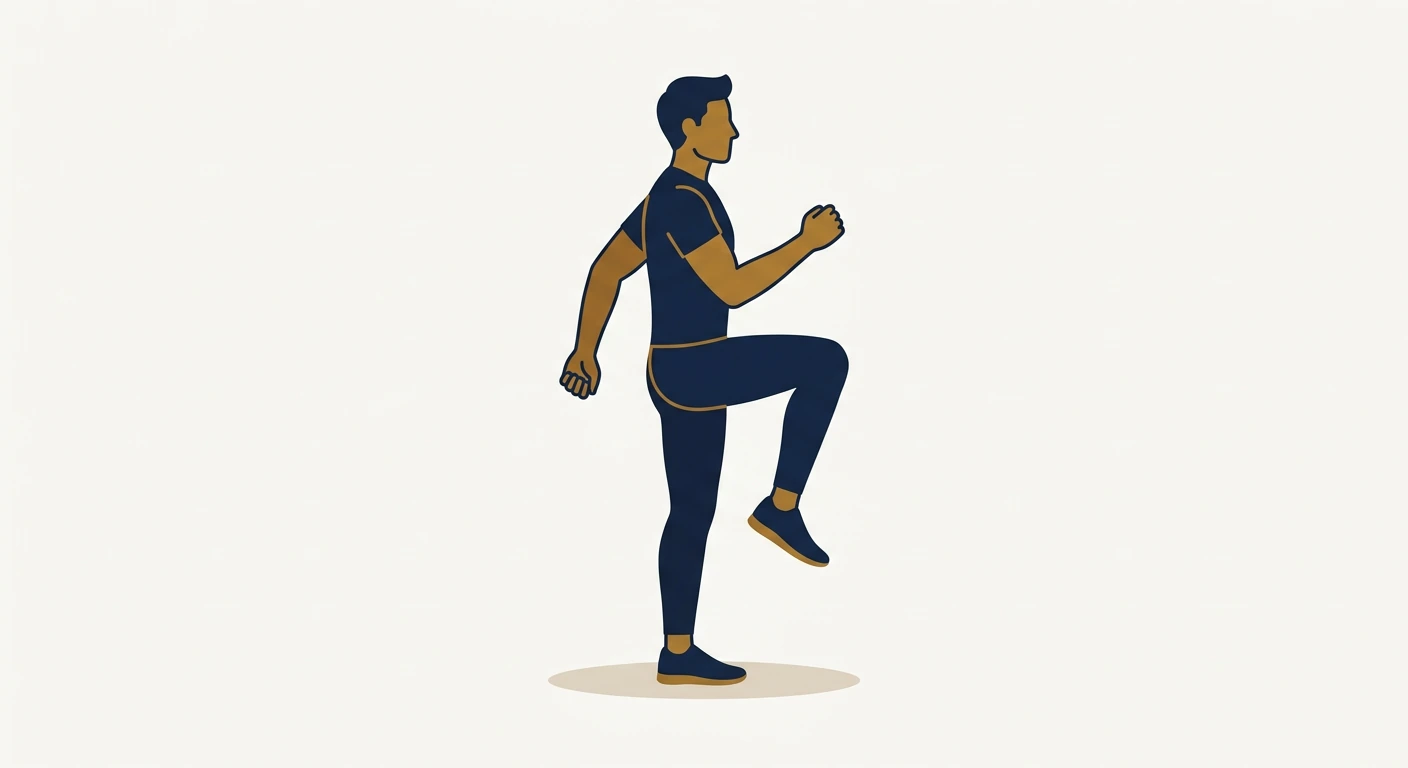
Setup and cues:
- Stand tall and march, lifting each knee to hip height.
- Swing the arms naturally, like walking with intent.
- Stay light on your feet.
- Breathe rhythmically; this should feel like a 4-6 out of 10 effort.
The mistake everyone makes: Treating it as nothing. Knees genuinely high and arms genuinely swinging make it real cardio.
Sets: 3-10 minutes continuous, or 3 rounds of 2 minutes between strength moves.
Easier: Slow the pace, hold a chair.
Harder: Speed up into high knees, or add light hand weights.
The jumping jack
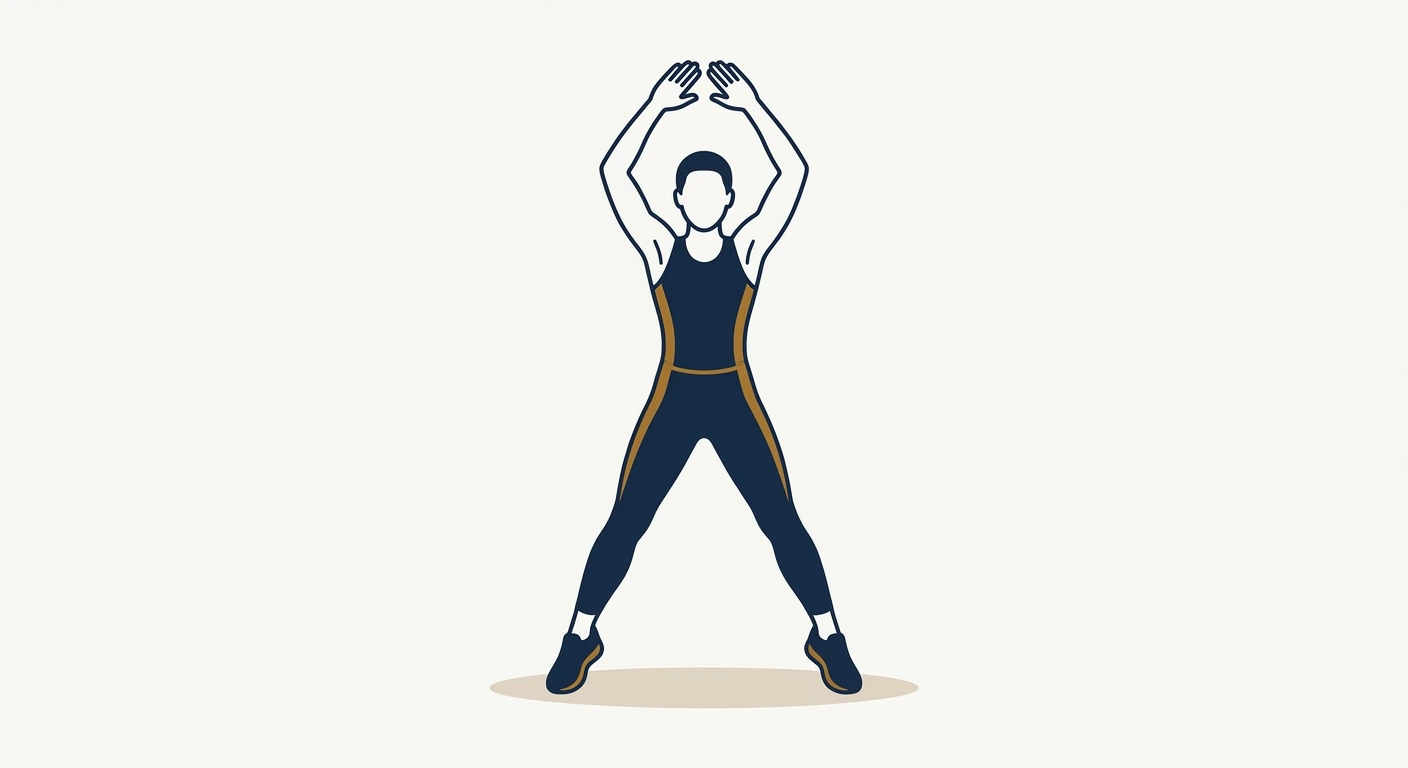
Setup and cues:
- Jump the feet wide as the hands sweep overhead.
- Jump them back together as the arms come down.
- Land softly, knees bent.
- Find a rhythm you can hold for a full minute.
The mistake everyone makes: Stiff landings. Quiet feet are kind feet - land through the balls of the feet.
Sets: 3 rounds of 30-60 seconds, rest 30-60 seconds.
Easier: Step-jacks: step one foot out at a time, no jumping.
Harder: Squat-jacks: land into a shallow squat each rep.
High knees
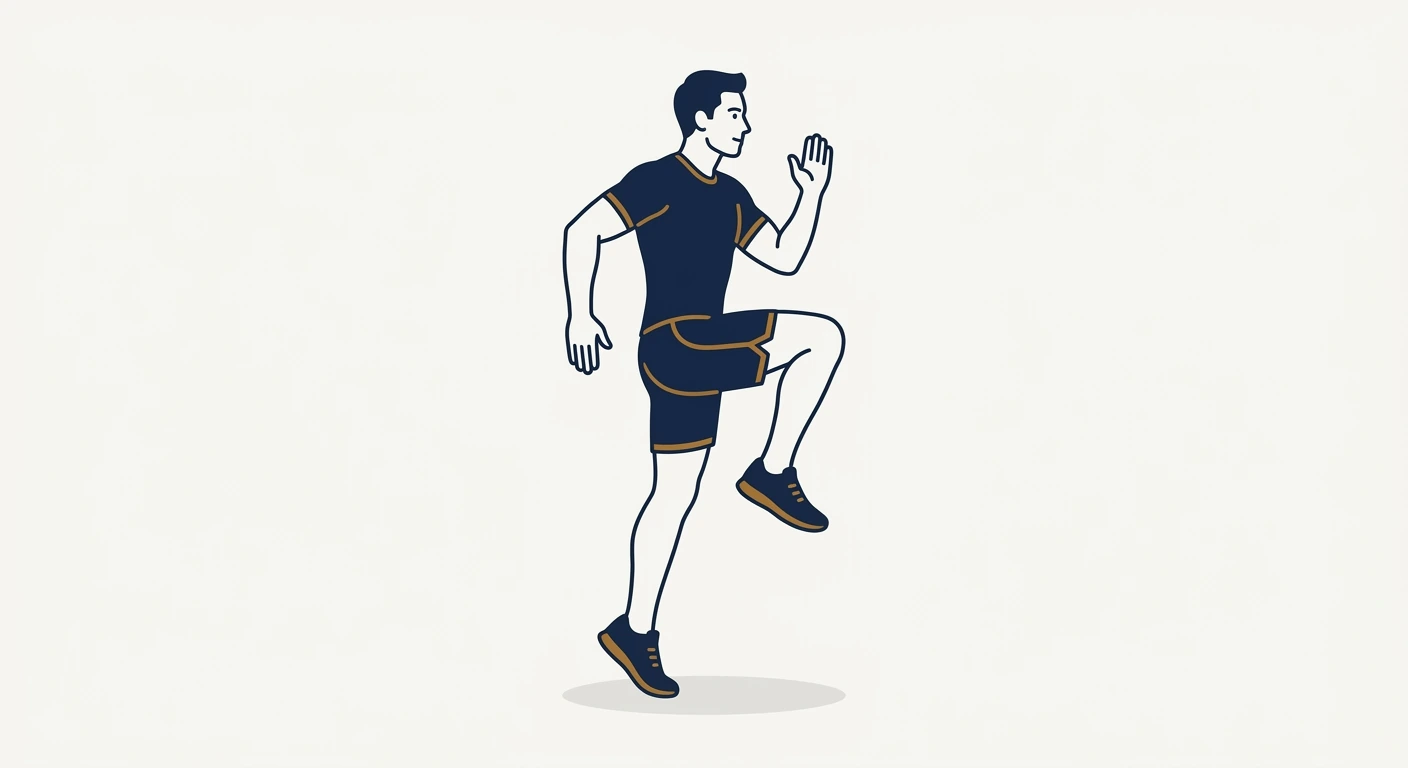
Setup and cues:
- Run in place, driving each knee to hip height.
- Stay on the balls of your feet, quick contacts.
- Pump the arms hard.
- Lean slightly forward from the ankles, not the waist.
The mistake everyone makes: Leaning back and flicking the heels instead of lifting the knees. Knees up, chest tall.
Sets: 3 rounds of 20-40 seconds, rest 60 seconds.
Easier: March in place with high knees instead of running them.
Harder: Sprint the knees faster for 20 seconds - a genuine interval.
The mountain climber
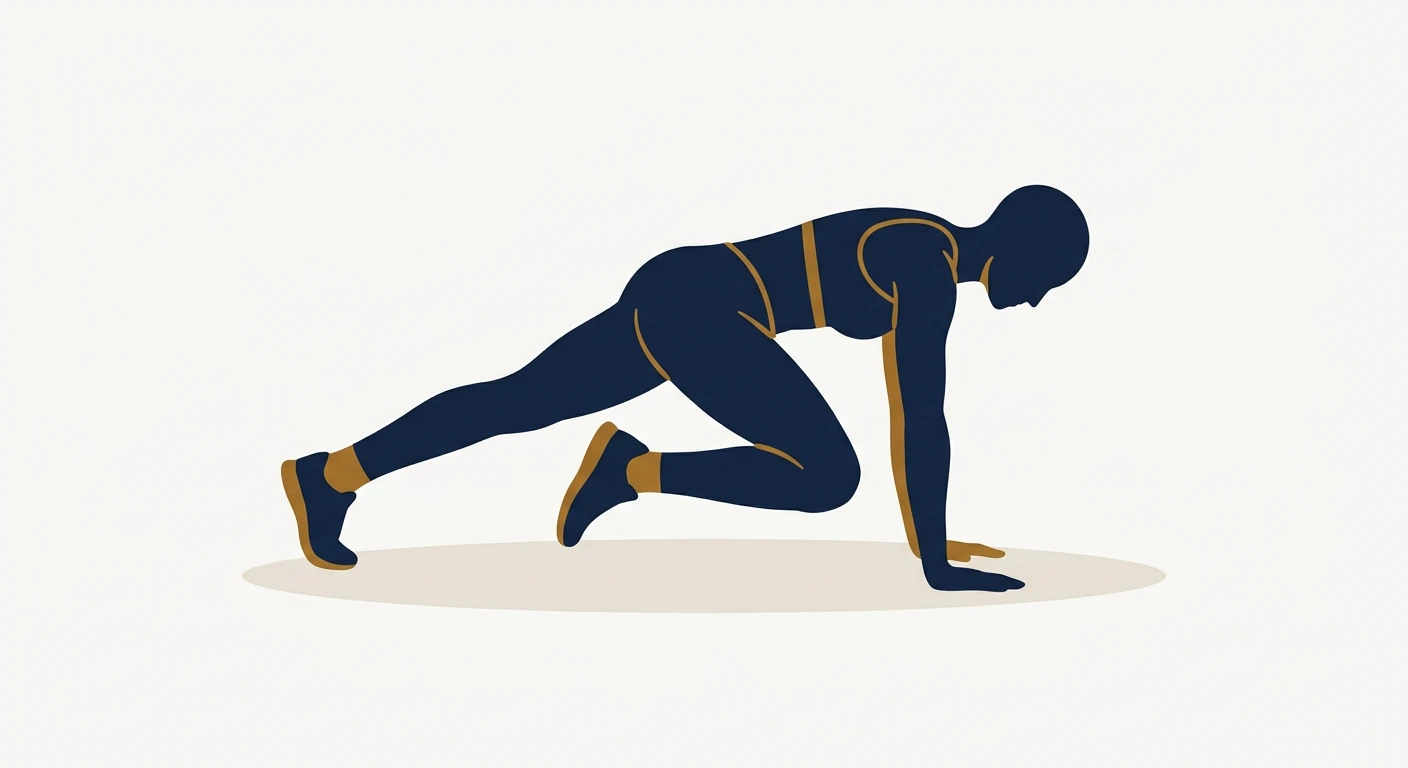
Setup and cues:
- Start in a strong plank, hands under shoulders.
- Drive one knee toward your chest, then switch quickly.
- Hips stay level and low - no piking up.
- Shoulders stay stacked over the hands.
The mistake everyone makes: Bouncing hips up and down. Lock the hips in place; only the legs move.
Sets: 3 rounds of 20-40 seconds, rest 60 seconds.
Easier: Slow it to a deliberate plank knee-tuck, hands on a bench.
Harder: Cross-crawlers: drive each knee toward the opposite elbow.
The squat-to-stand
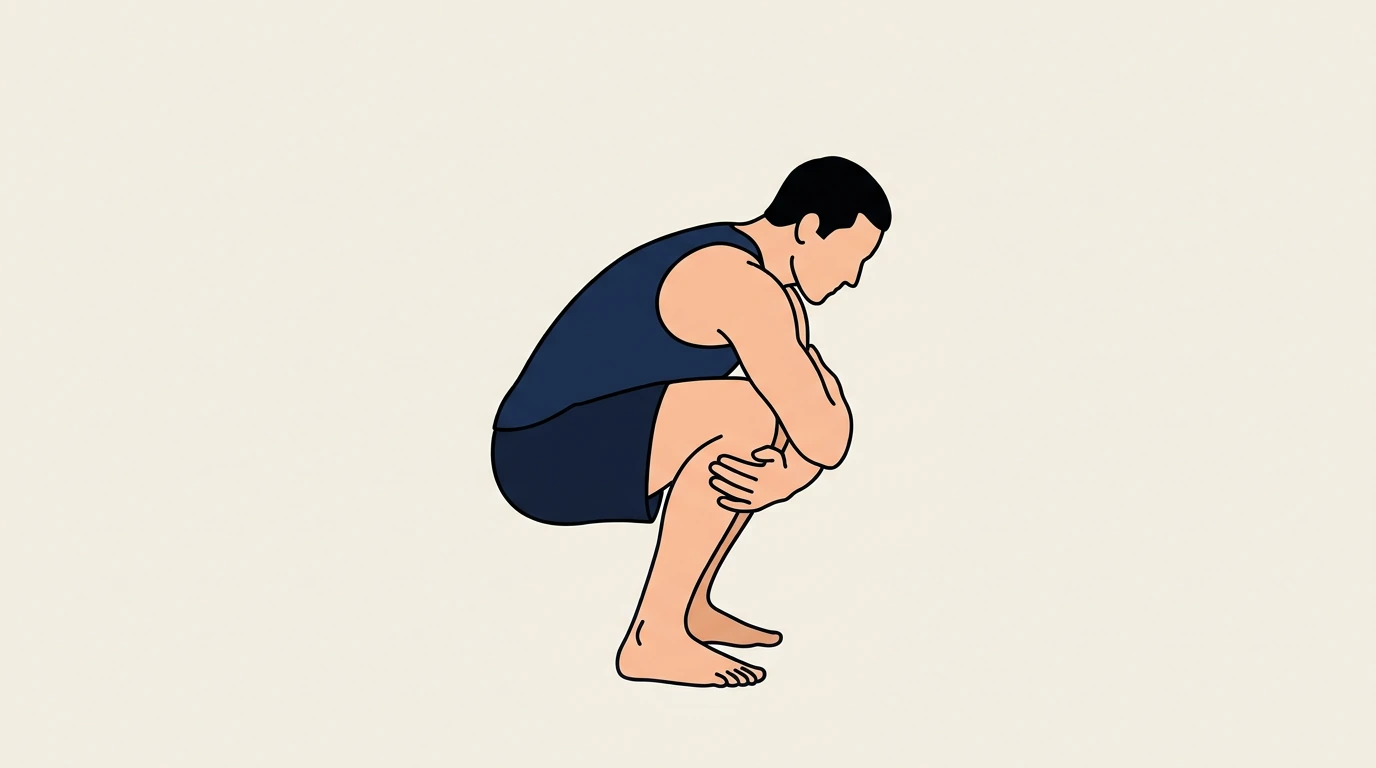
Setup and cues:
- Stand tall, then hinge and grab your toes (or shins).
- Drop your hips into a deep squat, keeping the grip.
- Lift the hips first, then walk the hands back toward the feet.
- Stand up and repeat. A flowing warm-up that wakes the whole back line.
The mistake everyone makes: Forcing depth on day one. Bend the knees as much as needed; the range opens up over weeks.
Sets: 2-3 rounds of 8-10 slow reps. Ideal as warm-up move one.
Easier: Grab the shins or knees instead of the toes.
Harder: Full grip on the toes with straighter legs each time.
The skater bound
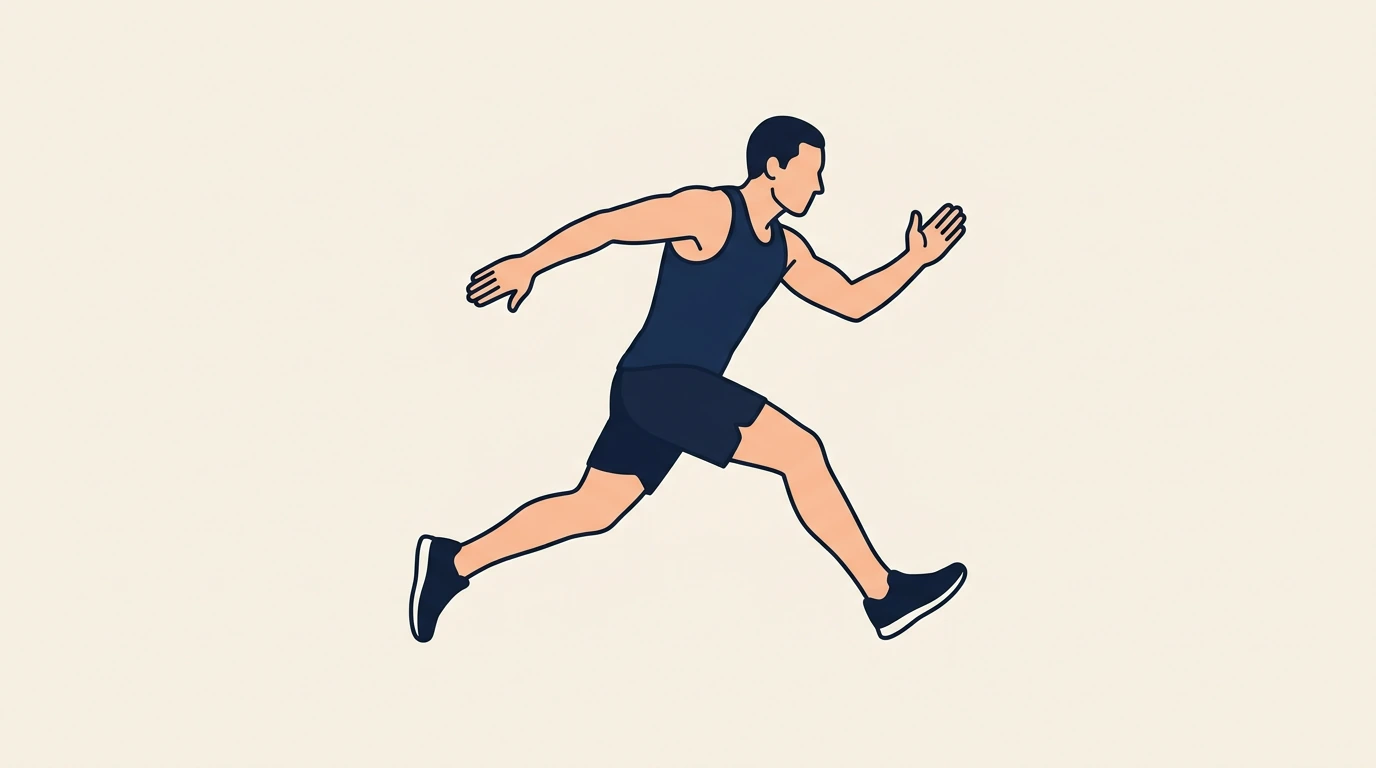
Setup and cues:
- Bound sideways from one foot to the other.
- Land softly on one leg, opposite leg sweeping behind.
- Absorb the landing with a bent knee and hip.
- Pause briefly on each landing to own the balance.
The mistake everyone makes: Landing on a straight leg with a hard knee. Every landing is a small squat.
Sets: 3 rounds of 20-30 seconds, rest 60 seconds.
Easier: Step side-to-side without leaving the floor.
Harder: Bound further and hold each landing for two seconds.
The step-through burpee
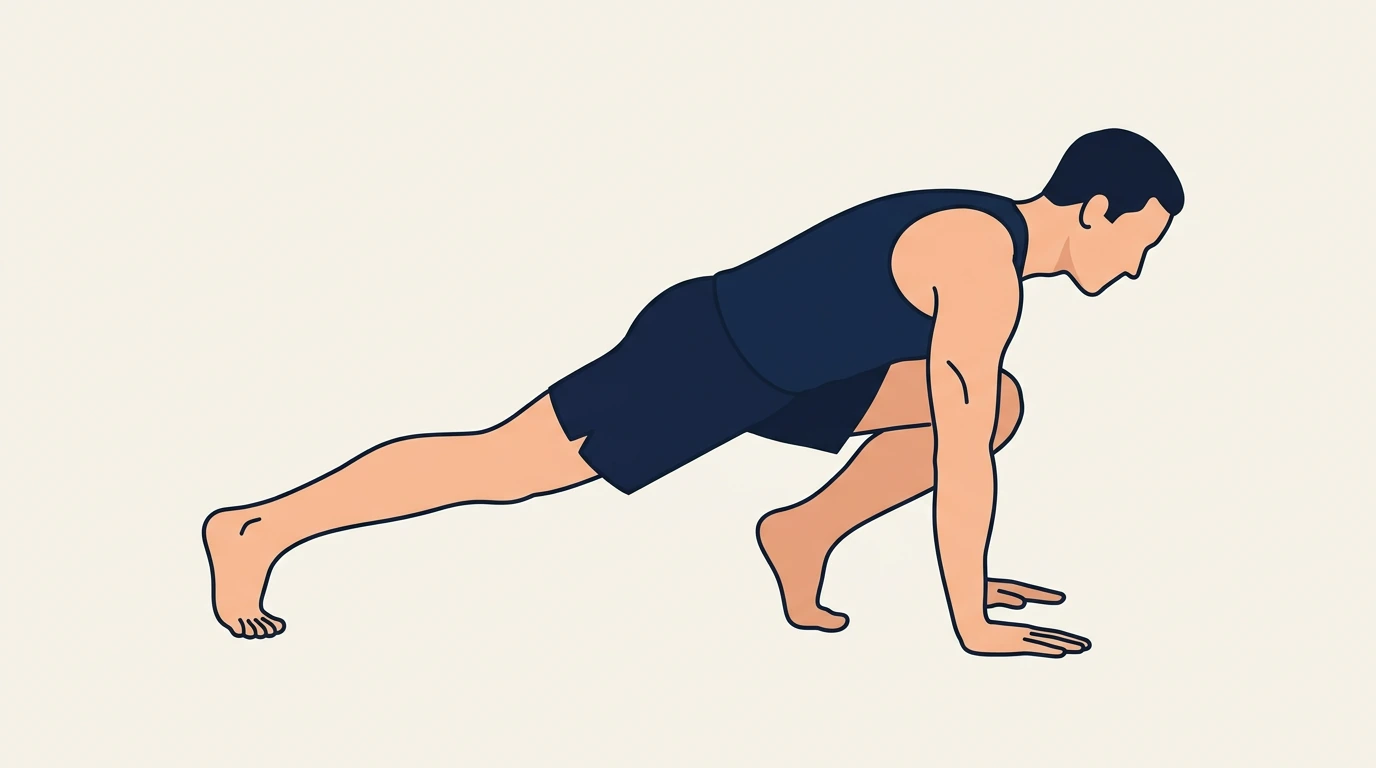
Setup and cues:
- Squat, place your hands on the floor.
- Step the feet back to a plank (no jump needed).
- Step the feet back in and stand tall - add a small hop if you like.
- That is one. Smooth beats frantic.
The mistake everyone makes: Letting the hips sag in the plank phase. The plank in the middle is part of the rep, not a rest.
Sets: 3 rounds of 5-10 reps, rest 60-90 seconds.
Easier: Walk the hands out on an incline (bench) instead of the floor.
Harder: Jump back and jump up, or add a push-up in the plank.
Jump rope
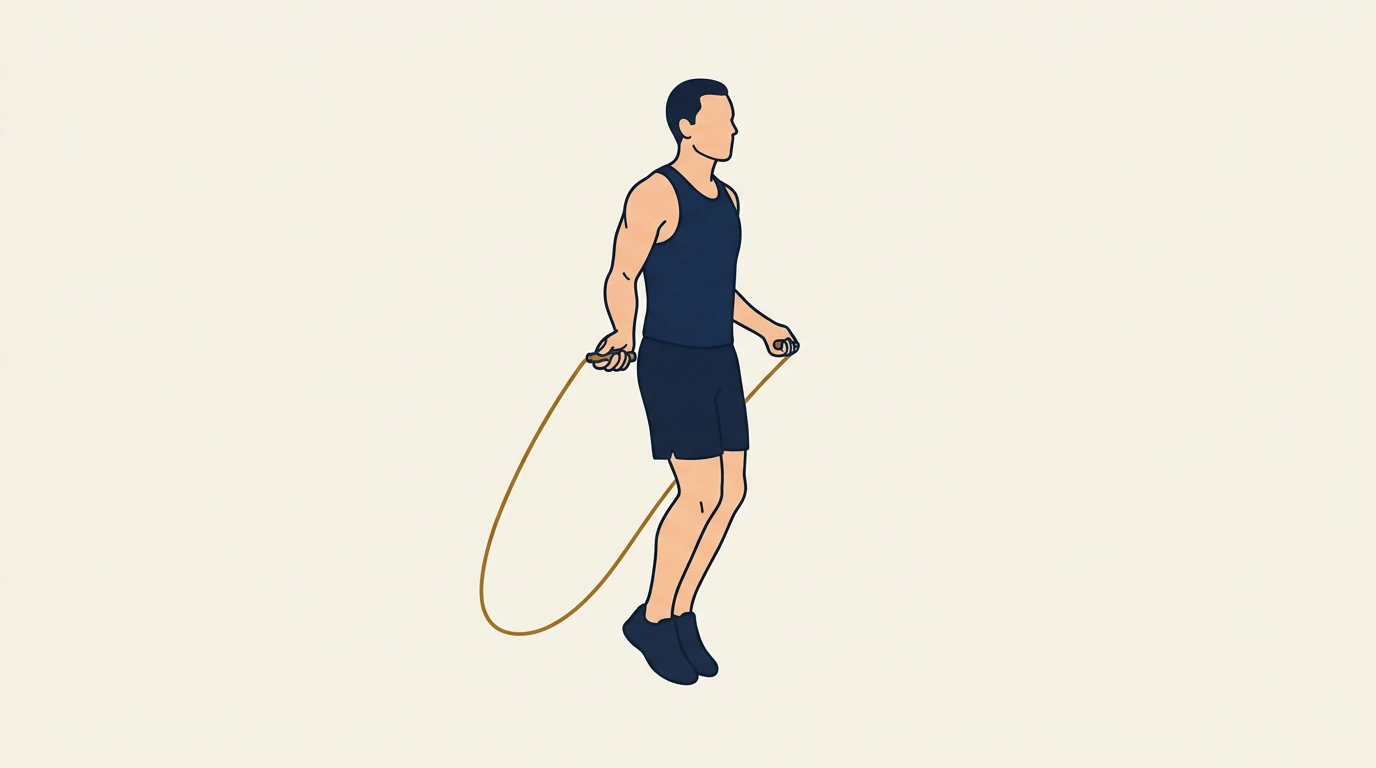
Setup and cues:
- Small hops, barely leaving the floor - an inch is plenty.
- Wrists turn the rope; the arms stay quiet.
- Land on the balls of the feet with soft knees.
- Start with 30-second rounds and build.
The mistake everyone makes: Jumping too high and tiring the calves in a minute. Small, fast, relaxed hops.
Sets: 3-5 rounds of 30-60 seconds, rest 30-60 seconds.
Easier: Mime the rope and do the same small hops.
Harder: Alternate feet as if jogging, or try 20 fast skips each round.
Shadow boxing
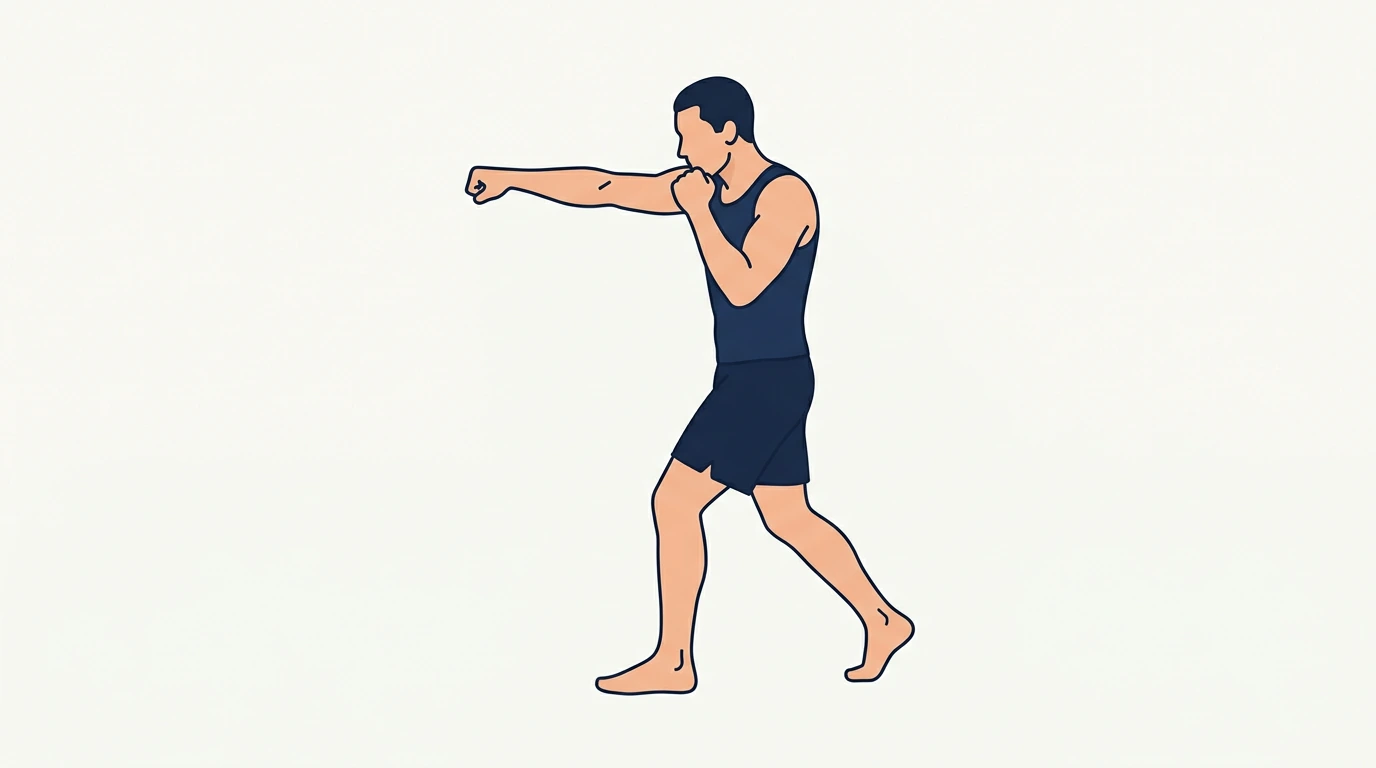
Setup and cues:
- Stand staggered, hands up, weight on the balls of the feet.
- Throw straight punches, turning the hip with each one.
- Keep moving - small steps, slight slips, hands returning to guard.
- Stay relaxed; tension kills the pace.
The mistake everyone makes: Fully straightening and snapping the elbows. Punch with control - stop just short of lockout.
Sets: 3 rounds of 1-2 minutes, rest 60 seconds.
Easier: Punch slower with feet still.
Harder: Add a squat each time the hands reset, or hold light weights (under 1 kg).
Stair climbing
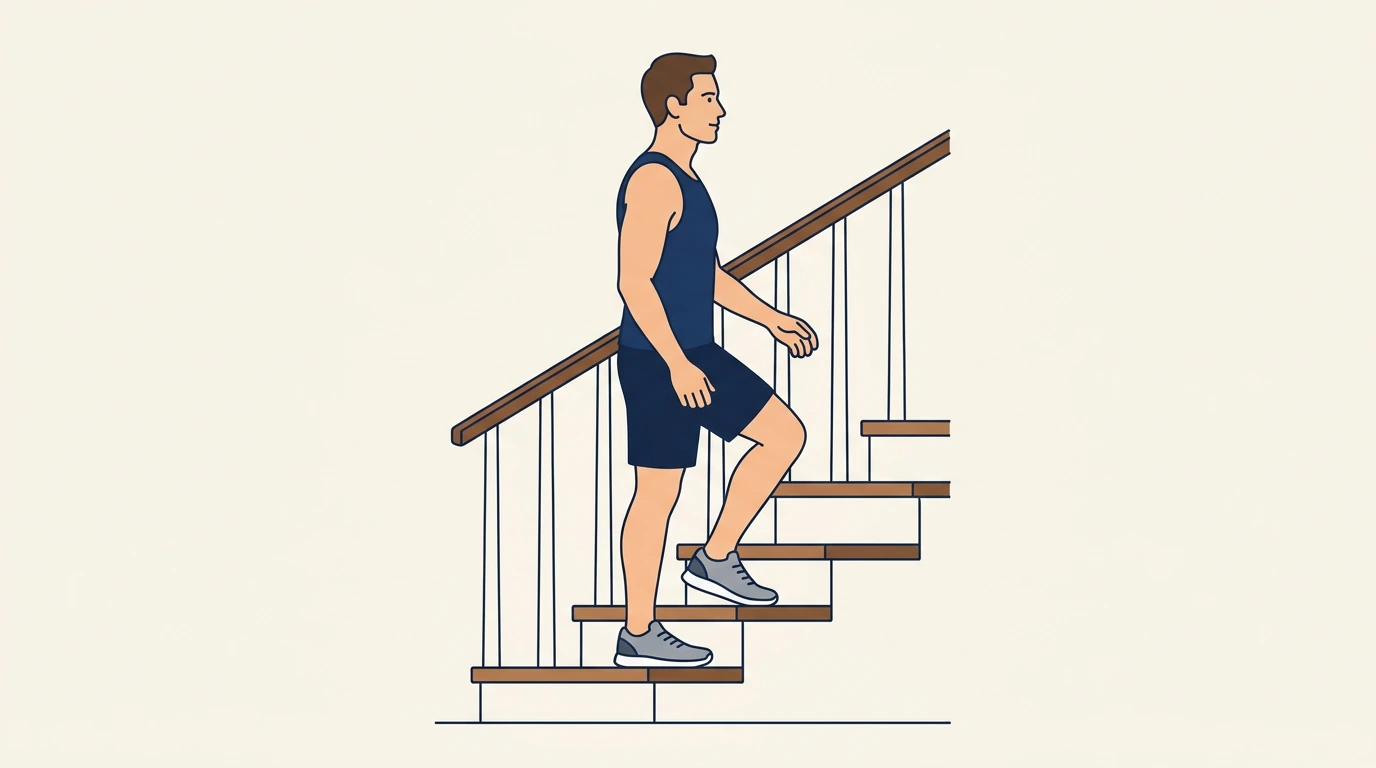
Setup and cues:
- Climb at a steady pace, whole foot on each step where you can.
- Use the rails lightly for balance, not for lifting.
- Walk down slowly - the way down is the braking work.
- Steady beats sprinting for most people.
The mistake everyone makes: Sprinting up and then skipping the descents to rest. Down-walks are part of the set.
Sets: 5-10 minutes of up-and-down, or 3 rounds of 2 minutes.
Easier: One flight at a time with full rests.
Harder: Two steps at a time, or add a light backpack.
The full burpee
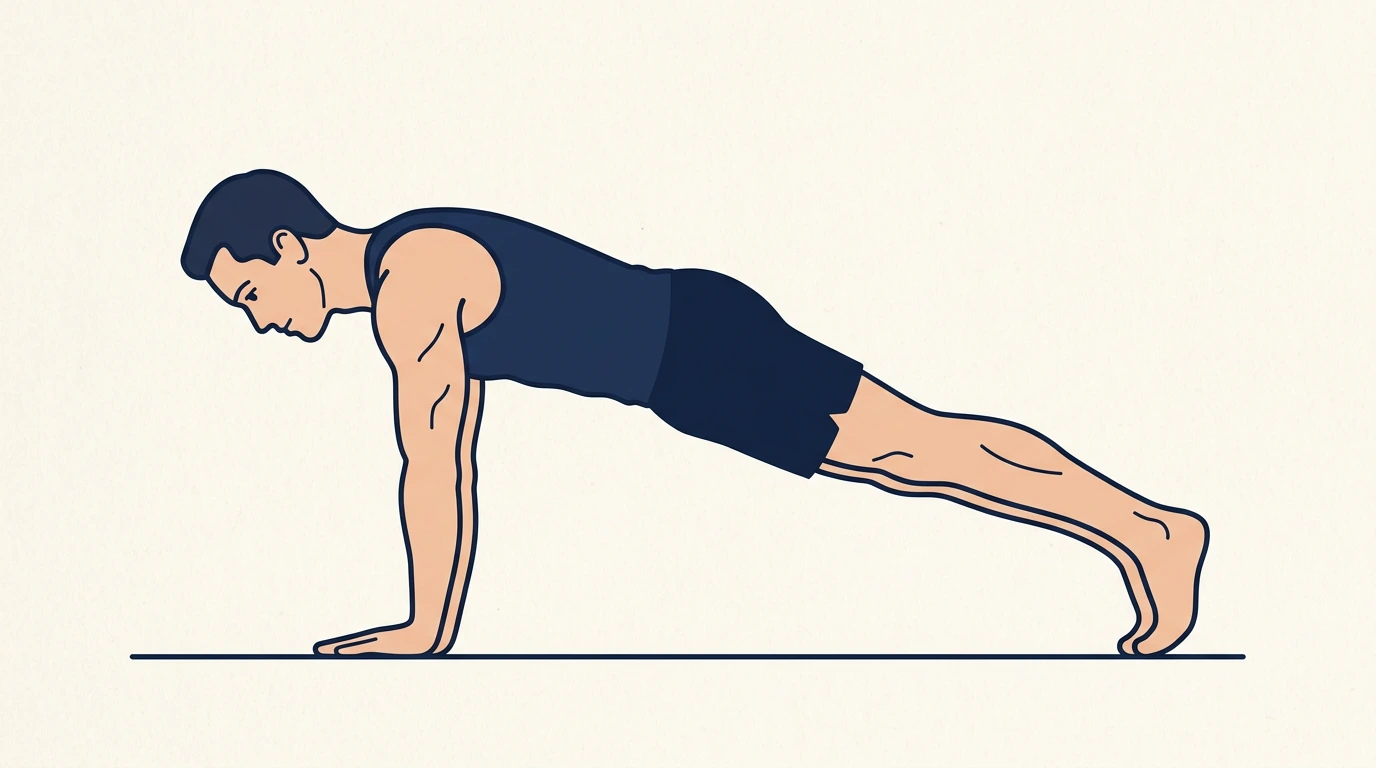
Setup and cues:
- Squat, hands down, jump the feet back to a strong plank.
- Lower the chest to the floor - a full push-up, chest to the ground.
- Jump the feet back in and explode up into a genuine jump, arms overhead.
- Land soft, reset, repeat. The pace you can hold is the right pace.
The mistake everyone makes: Skipping the chest-to-floor to go faster - that is a hop, not a burpee. Own every phase or slow down.
Sets: 3 sets of 5-12 reps, rest 60-90 seconds.
Easier: The step-through burpee (no jump, step back) - it is on this page's conditioning list.
Harder: A tuck jump at the top, or a 20-second sprint of perfect reps.
The jumping lunge
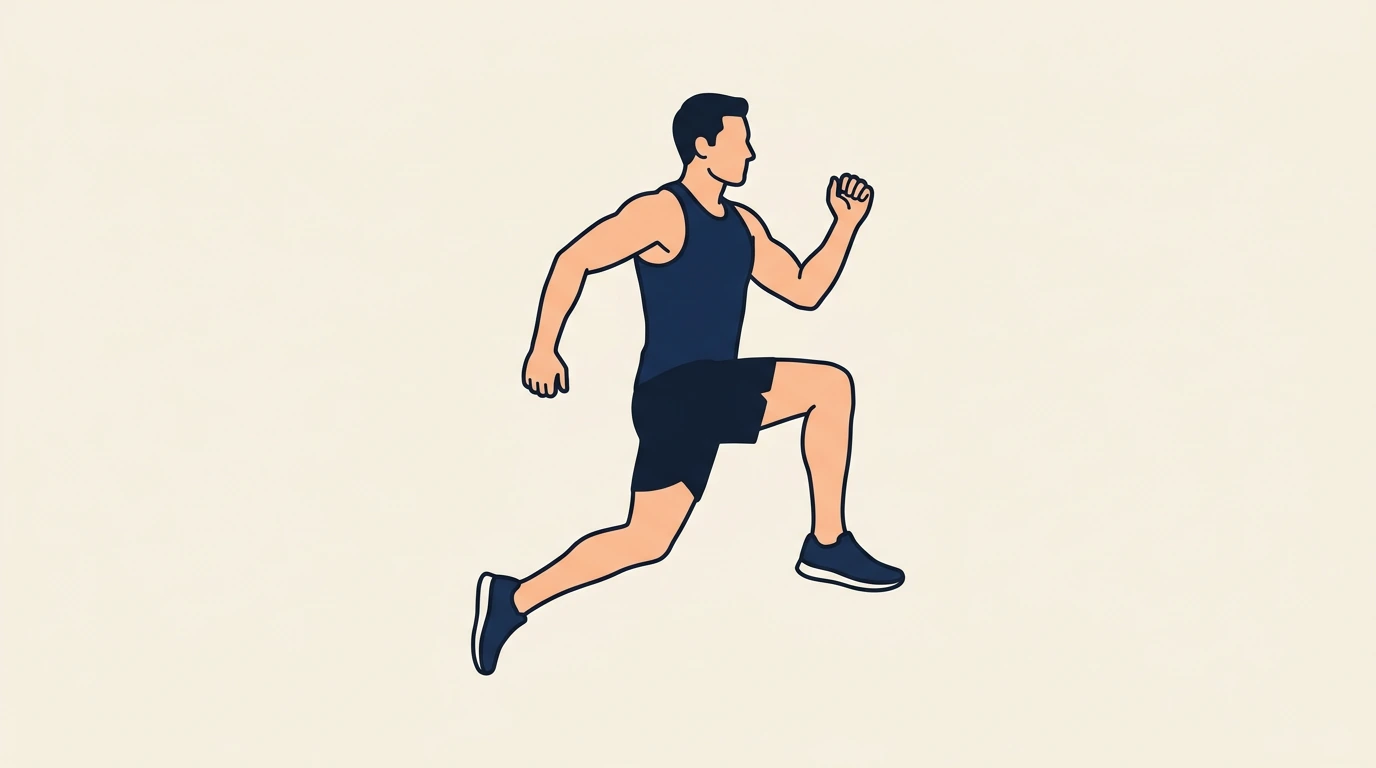
Setup and cues:
- Drop into a lunge - both knees about 90 degrees.
- Explode up and switch legs in the air.
- Land soft into the next lunge, front shin vertical.
- Find a rhythm; the landing is the skill.
The mistake everyone makes: Landing on a straight leg with a stiff knee. Every landing is a soft, quiet squat.
Sets: 3 sets of 10-20 total jumps, rest 60-90 seconds.
Easier: Alternating reverse lunges (no jump) - same pattern, no impact.
Harder: Fewer, higher jumps with a mid-air pause.
Sprint intervals
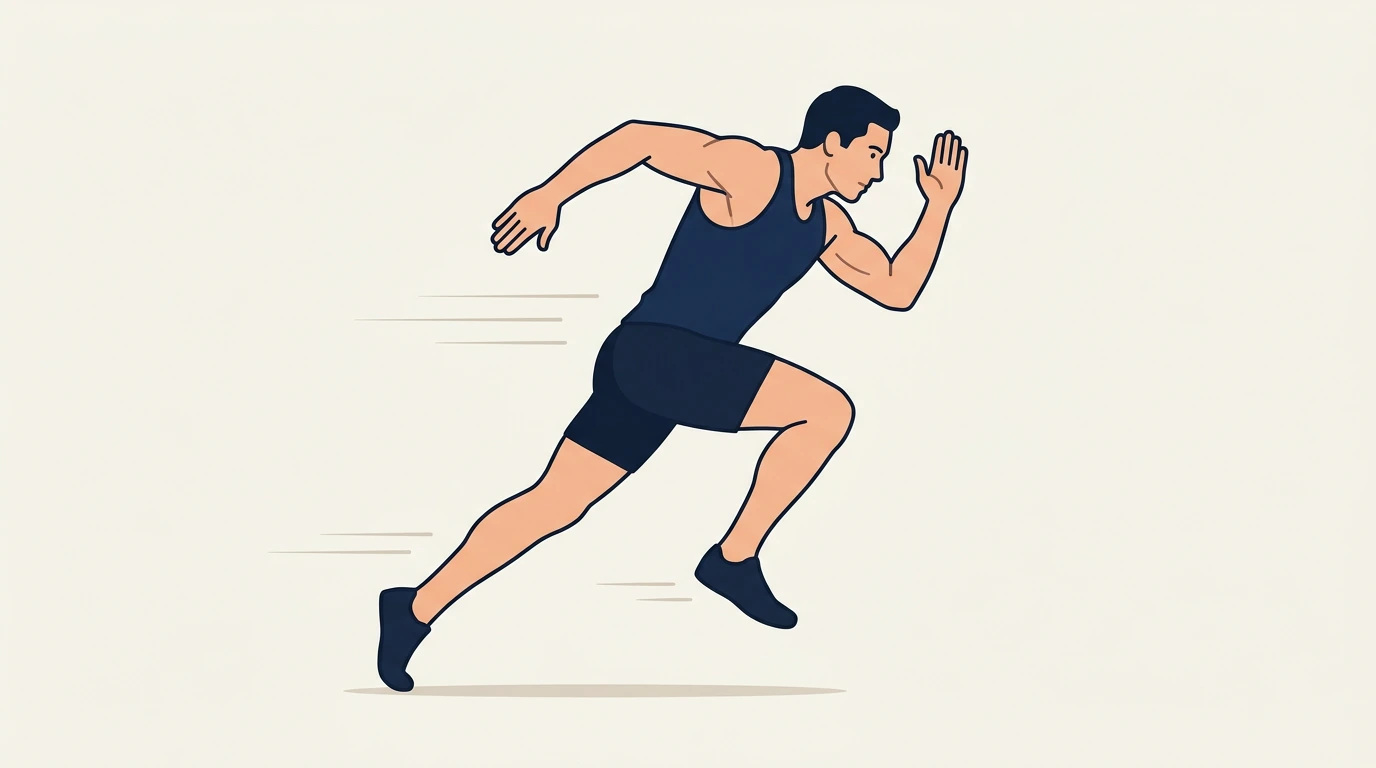
Setup and cues:
- Warm up properly first - five easy minutes and a few strides.
- Run hard for 15-30 seconds: not all-out panic, but a pace you could not hold for a minute.
- Walk for 60-90 seconds until your breathing settles.
- Repeat 4-8 rounds. Done. That is the whole session.
The mistake everyone makes: Sprinting cold - hamstrings hate it - or turning every interval into a race against yesterday. Consistent hard beats heroic once.
Sets: 4-8 rounds of 15-30 seconds hard, 60-90 easy, once or twice a week at most.
Easier: Hill walking with fast effort on the ups, or shorter sprints.
Harder: Longer work intervals (45-60 seconds) or an extra round - never both at once.
Form beats everything. Stop short of sharp pain, leave 1-2 reps in the tank, and add a rep or a little load when the top of the range feels easy two sessions running. Numbers on this page are approximate starting points, not medical advice.
Keep going
- Push day, taught: 16 chest, shoulder and tricep moves
- Pull day, taught: 16 back and bicep moves
- Leg day, taught: 16 squat, lunge and hinge moves
- The workout builder - turn these moves into a weekly plan
- The one-rep max calculator - what your reps say about your strength
Sources
Keep going
Related on this desk.
General information, not medical advice. If you have a health condition, have been inactive for a long time, or something hurts sharply, talk to a qualified health professional first.