Evidence-aware · beginner-first · no miracle claims
Push day, taught: 16 chest, shoulder and tricep moves
In one line: Every push exercise in the library - from wall push-ups to handstand holds - with setup, the one cue that matters, the common mistake, and the sets.
Pushing is half of all upper-body strength: pressing a door, lifting a box overhead, getting up off the floor. This page collects every pushing exercise in the library, ordered roughly from easiest to hardest within each family of kit.
New here? Start with the incline push-up and the bench dip. Own those for two weeks, then work down this page. Each move lists its muscles, the kit you need, the setup cues a coach would give you, the mistake everyone makes, and the sets to aim for.
The incline push-up
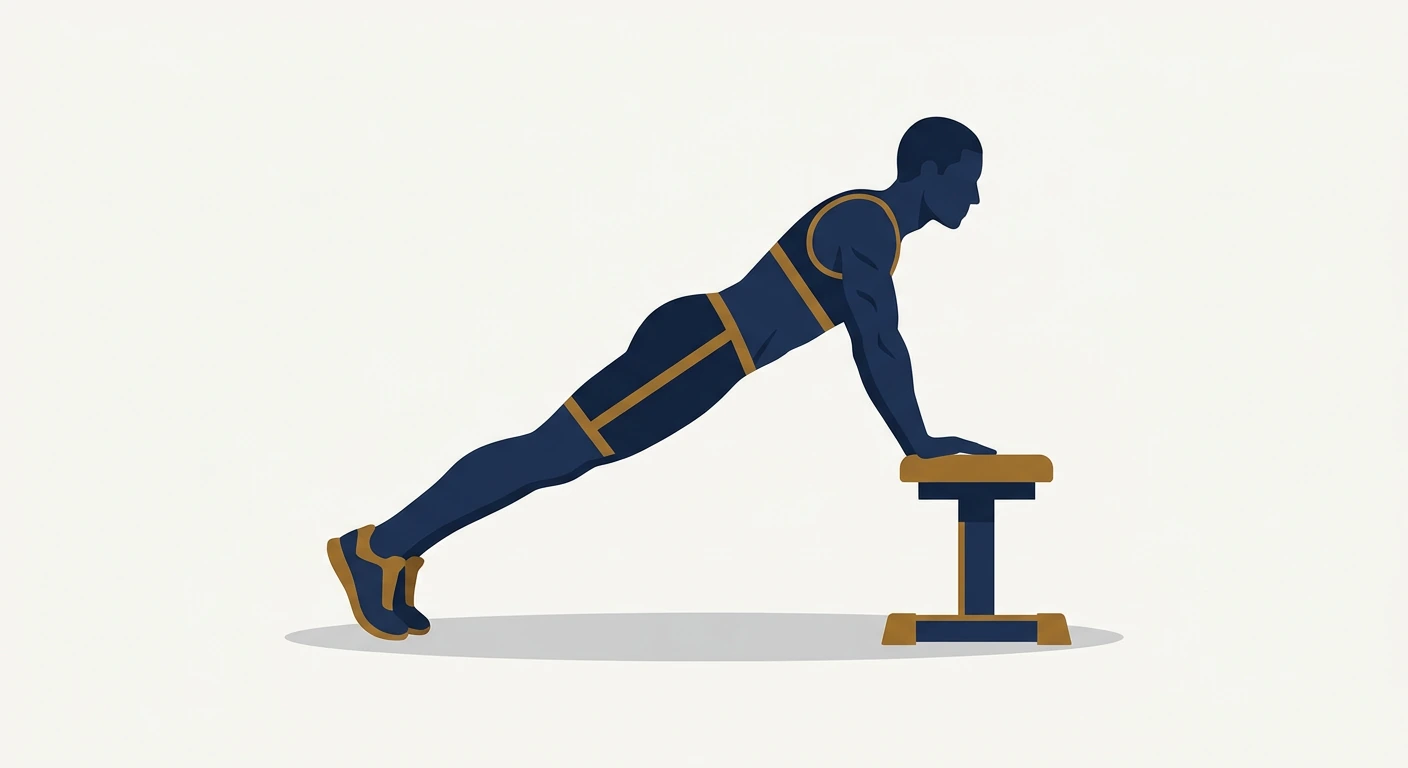
Setup and cues:
- Hands shoulder-width on the bench, body one straight line from head to heels.
- Lower your chest to the edge, elbows about 45 degrees from your sides.
- Press the floor away until your arms are straight again.
- Squeeze your stomach so your hips do not sag.
The mistake everyone makes: Going too fast. Two seconds down, one second up - the slow reps are the ones that count.
Sets: 3 sets of 6-12 reps, rest 60-90 seconds.
Easier: Raise the surface: a wall push-up (hands on a wall) is the easiest version.
Harder: Lower the surface. When the floor feels easy, see the full push-up.
The push-up
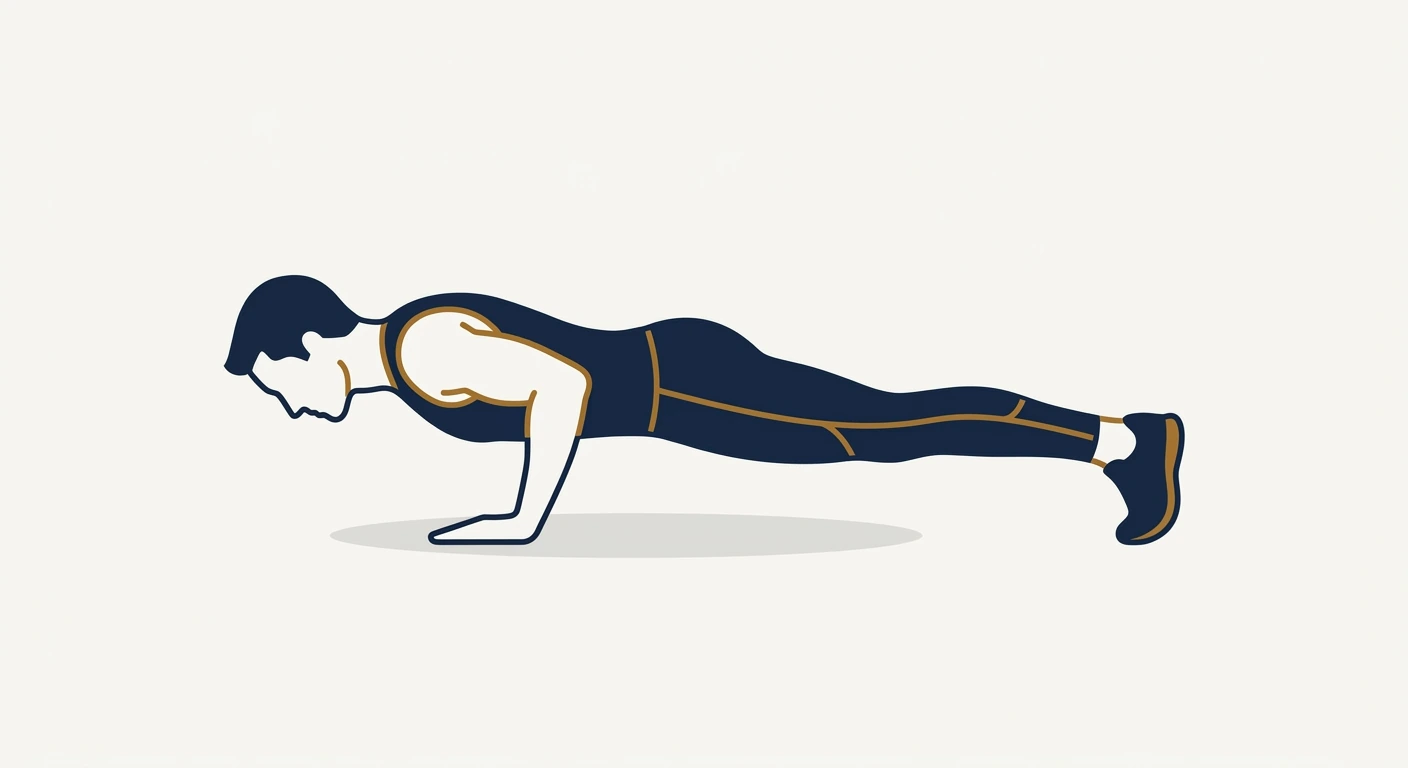
Setup and cues:
- Hands just outside your shoulders, body one straight line.
- Look at the floor a little ahead of you, not at your feet.
- Lower until your chest is a fist-height from the floor.
- Press up and think about pushing the floor away from you.
The mistake everyone makes: Hips sagging or piking. If your lower back strains, drop to your knees or raise your hands - form beats reps.
Sets: 3 sets of 5-15 reps, rest 60-90 seconds.
Easier: Knees down, or hands on a bench (the incline push-up).
Harder: Feet on a step, a backpack with books, or slow the lowering phase to three seconds.
The pike push-up
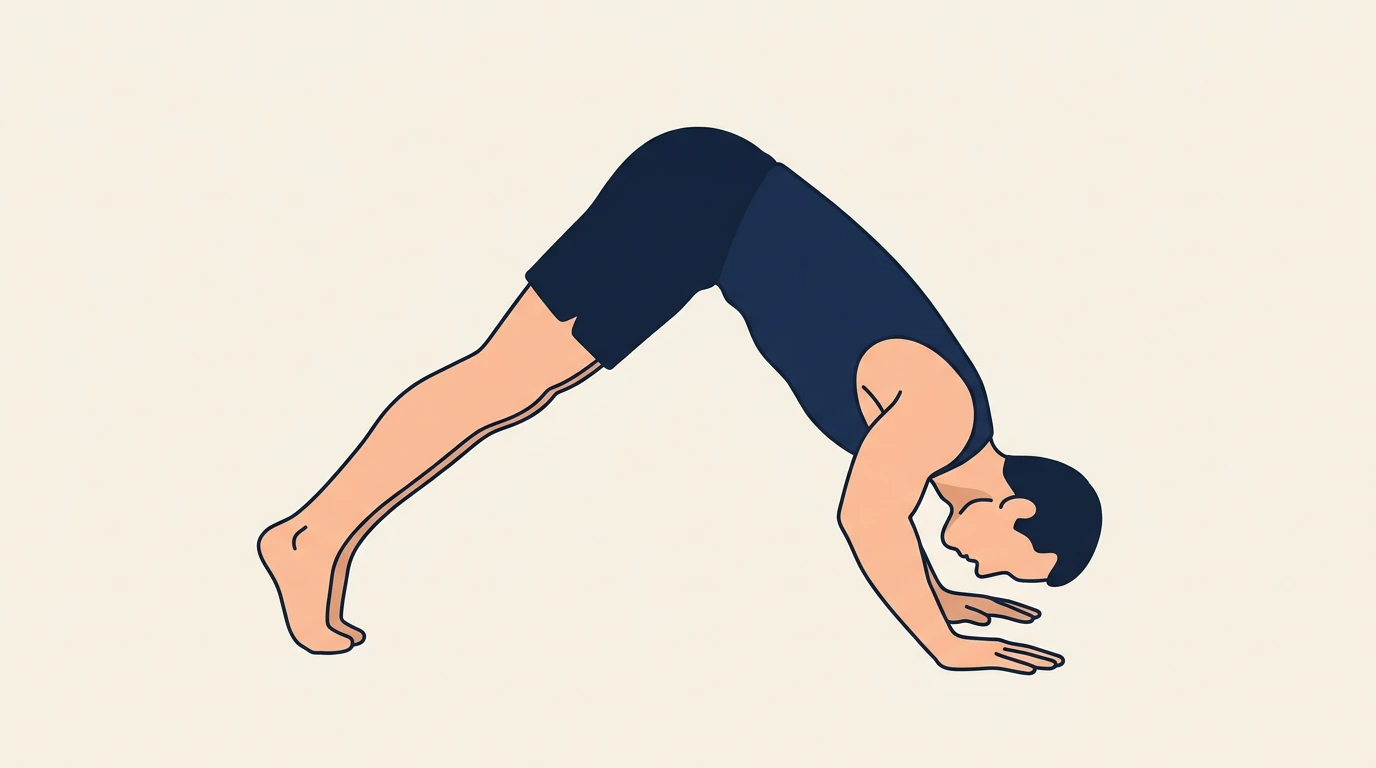
Setup and cues:
- From a push-up position, walk your feet in so your hips point at the ceiling.
- Your body forms an upside-down V. Head between your arms.
- Bend your elbows and lower the top of your head toward the floor.
- Press back up without letting your hips sink.
The mistake everyone makes: Turning it into a normal push-up by letting the hips drop. The hips stay high the whole time.
Sets: 3 sets of 4-10 reps, rest 90 seconds.
Easier: Walk the feet less far in - a less steep angle is easier.
Harder: Raise your feet on a step. This is the road to handstand push-ups.
The dumbbell bench press
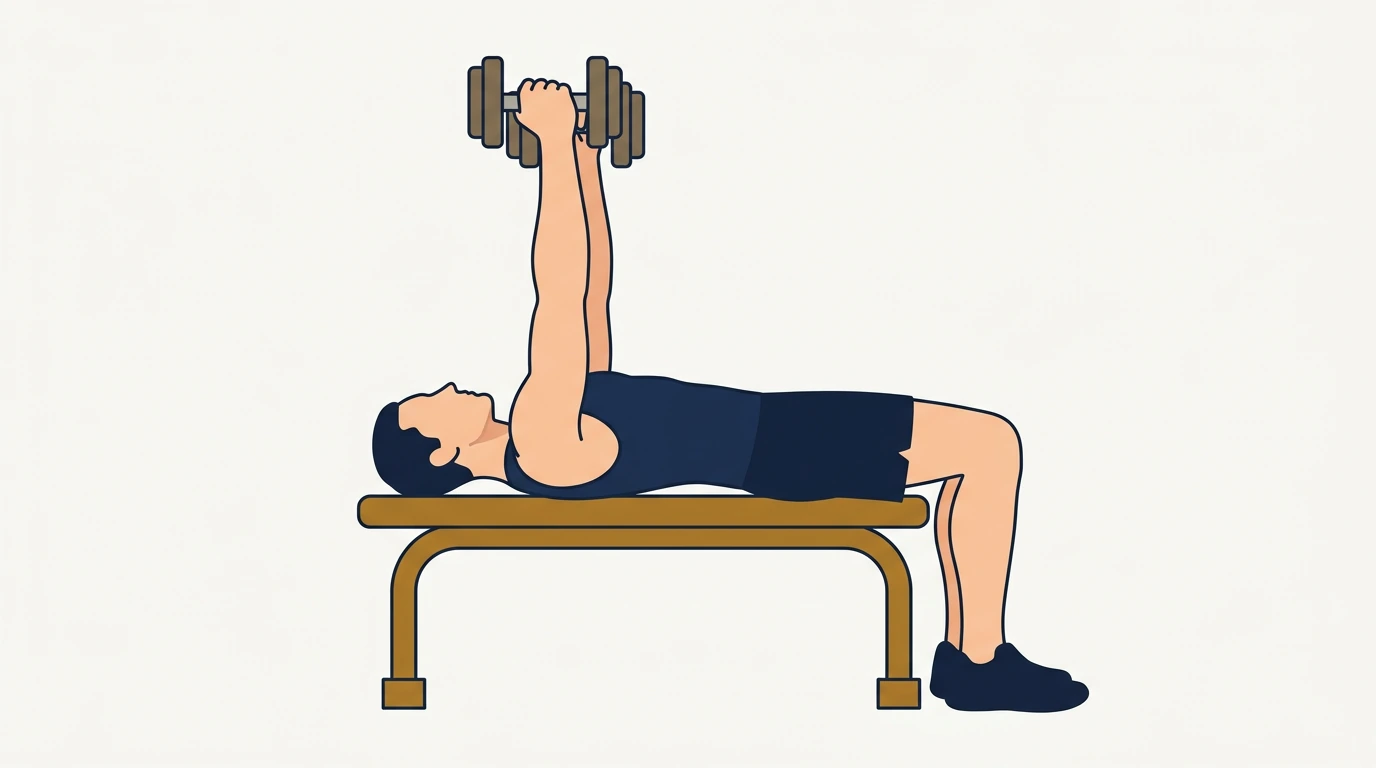
Setup and cues:
- Lie back, dumbbells at chest level, elbows about 45 degrees from your body.
- Press the dumbbells up and slightly toward each other.
- Lower with control until your upper arms reach bench level.
- Keep your wrists stacked over your elbows the whole time.
The mistake everyone makes: Flaring the elbows out to a straight line with your shoulders - it grinds the shoulder joints. Keep them at 45 degrees.
Sets: 3 sets of 8-12 reps, rest 90 seconds.
Easier: Do it on the floor (the floor press): no bench needed and it protects the shoulder.
Harder: Slow the lowering to three seconds, or press one dumbbell at a time.
The dumbbell shoulder press
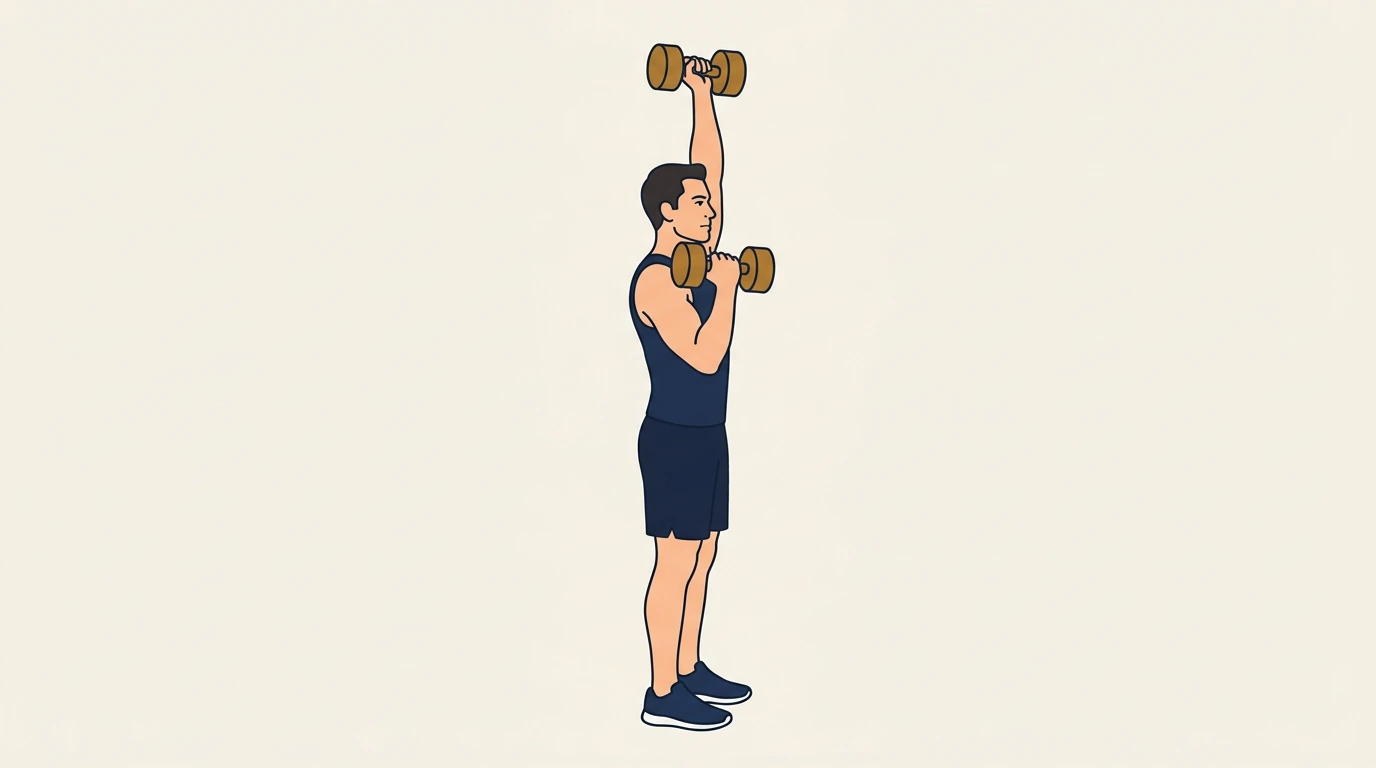
Setup and cues:
- Sit or stand, dumbbells at shoulder height, palms facing forward.
- Squeeze your stomach so your ribs do not flare.
- Press straight up until your arms are overhead.
- Lower until the dumbbells are level with your ears.
The mistake everyone makes: Leaning back and turning it into an incline press. If you cannot stay upright, the weight is too heavy.
Sets: 3 sets of 8-12 reps, rest 90 seconds.
Easier: Seated with your back supported, or alternate arms.
Harder: Stand up, or pause one second at the top of each rep.
The dumbbell chest fly
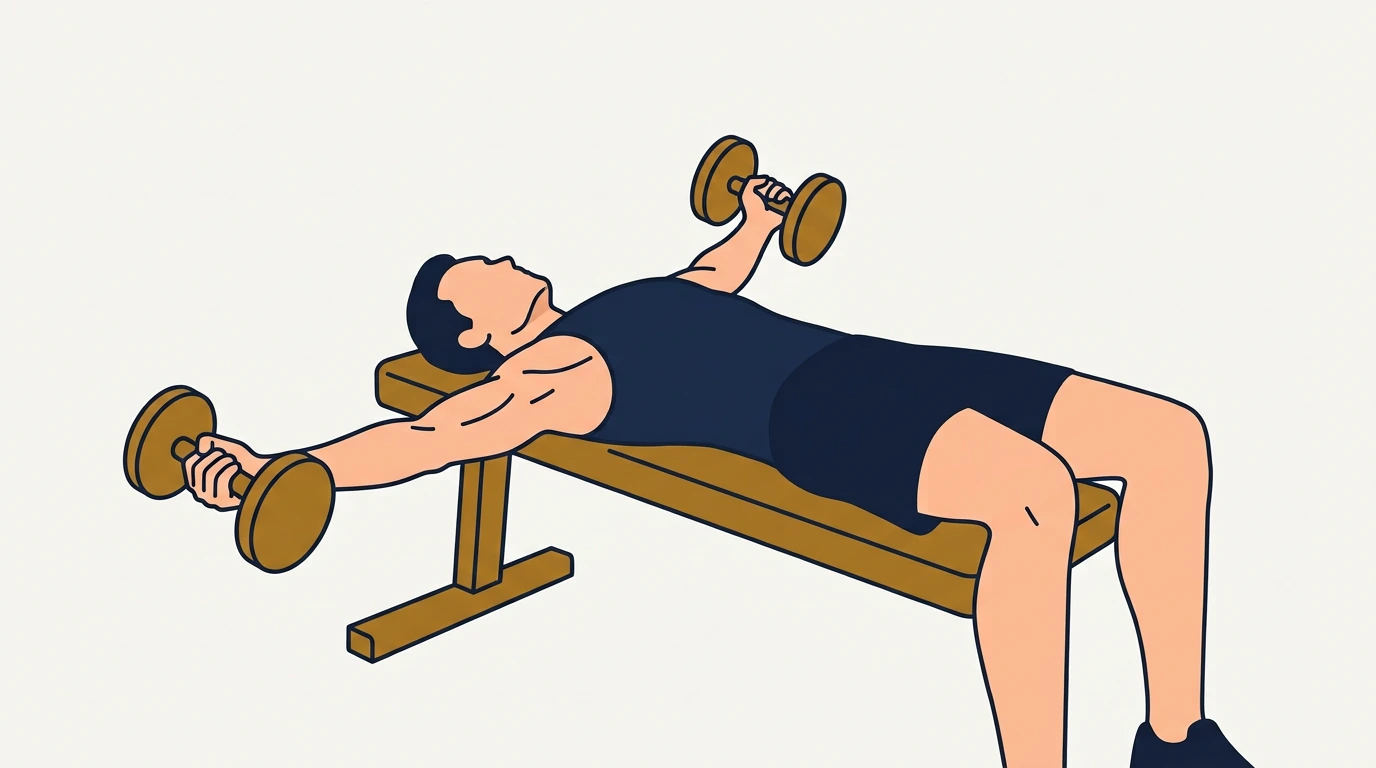
Setup and cues:
- Lie back, dumbbells above your chest, elbows softly bent.
- Open your arms out wide, as if hugging a barrel.
- Stop when your upper arms reach bench level.
- Bring the dumbbells back together the same way.
The mistake everyone makes: Bending and straightening the elbows as you go - that becomes a press. The elbow angle stays fixed.
Sets: 3 sets of 10-15 reps, rest 60 seconds. Light weights: this one rewards control, not load.
Easier: Smaller range: stop the open phase earlier.
Harder: Pause two seconds at the widest point.
The dumbbell lateral raise
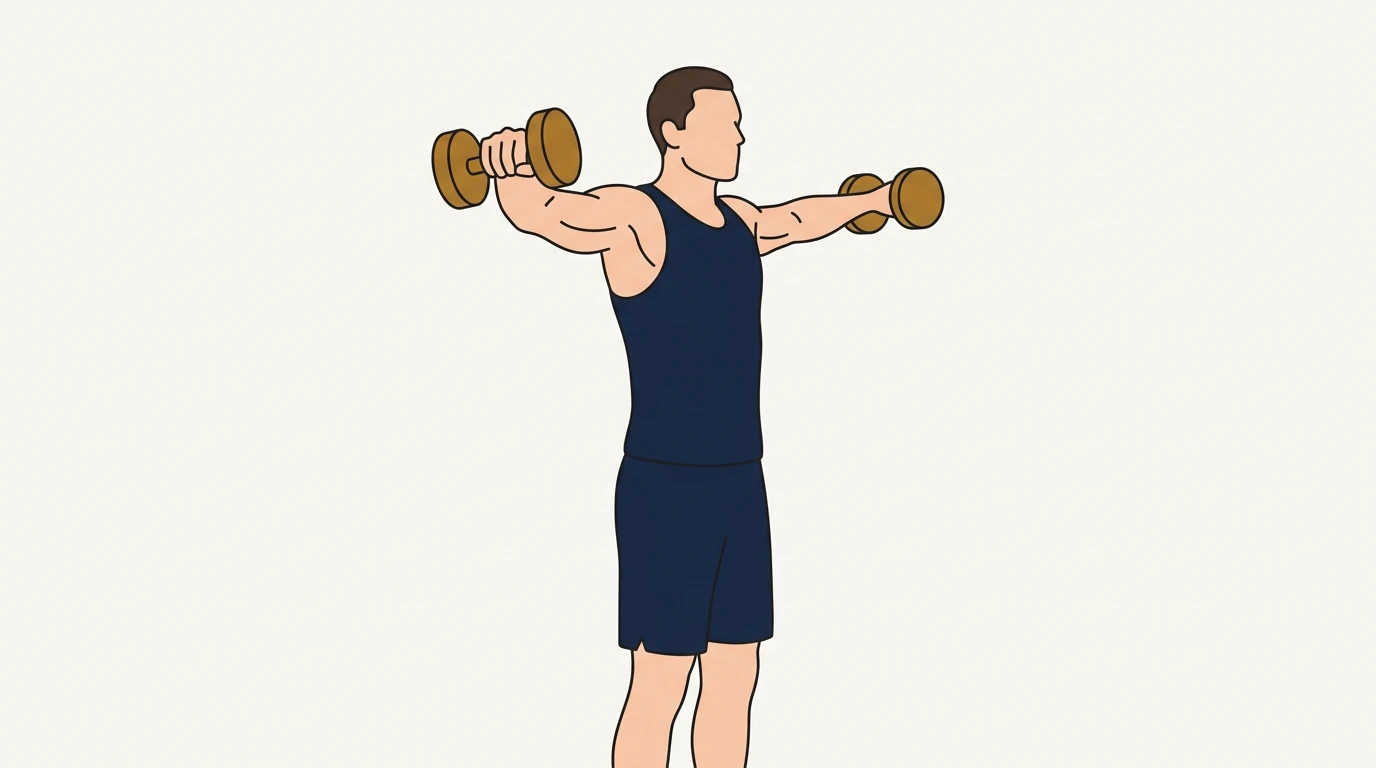
Setup and cues:
- Stand tall, a light dumbbell in each hand at your sides.
- Raise both arms out to the sides, elbows slightly bent.
- Stop at shoulder height - no higher.
- Lower slowly; do not let gravity do the work.
The mistake everyone makes: Swinging the weight up with your hips. Your shoulders should do the lifting, not momentum.
Sets: 3 sets of 12-15 reps, rest 60 seconds. Go lighter than you think.
Easier: Raise one arm at a time, holding a rail with the other.
Harder: Pause one second at the top, or add a slow three-second lowering.
The bench dip
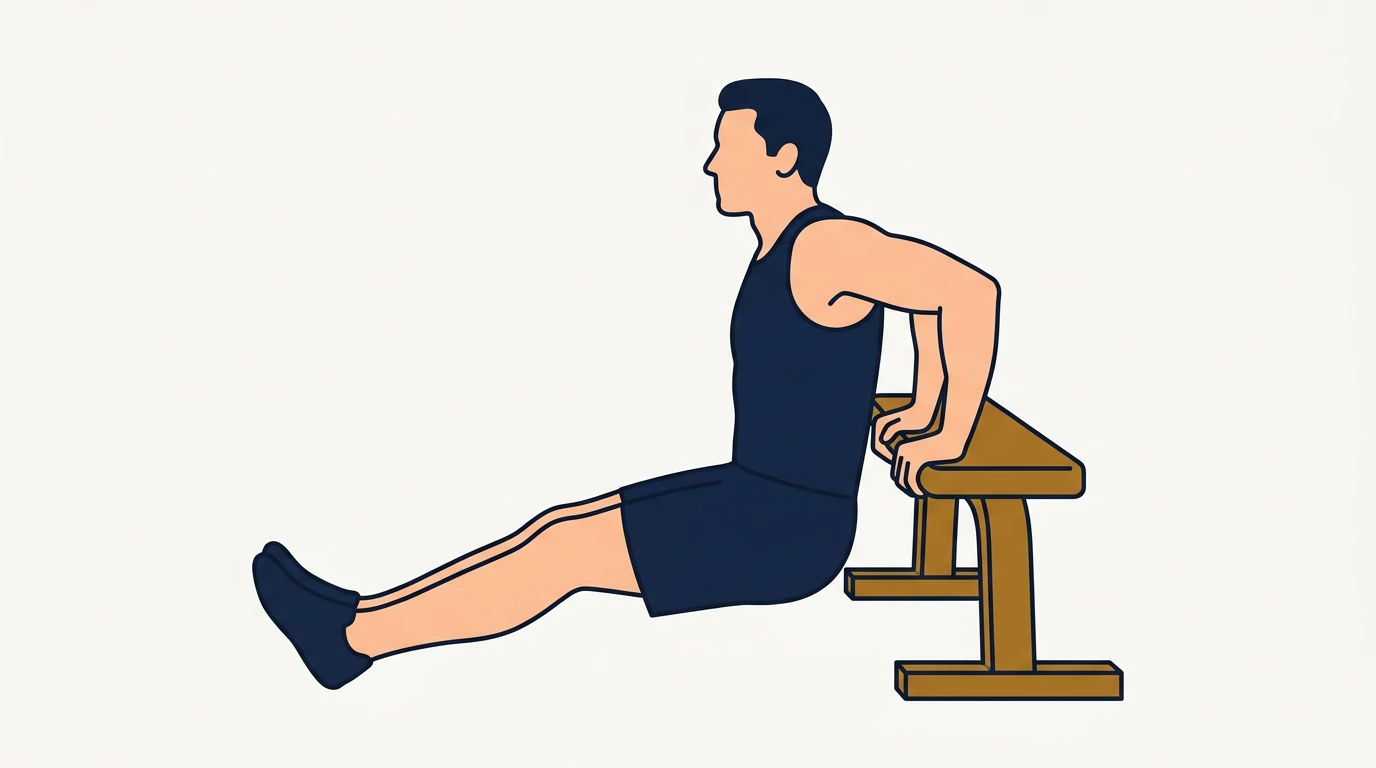
Setup and cues:
- Sit on the edge, hands beside your hips, fingers forward.
- Slide your hips off the bench, legs bent or straight.
- Bend your elbows to lower your hips - elbows point back, not out.
- Press back up until your arms are straight.
The mistake everyone makes: Letting the shoulders shrug up to your ears. Keep them pulled down away from your ears the whole set.
Sets: 3 sets of 6-12 reps, rest 60-90 seconds.
Easier: Bend your knees and keep your feet close to the bench.
Harder: Straighten your legs, then raise your feet onto a second surface.
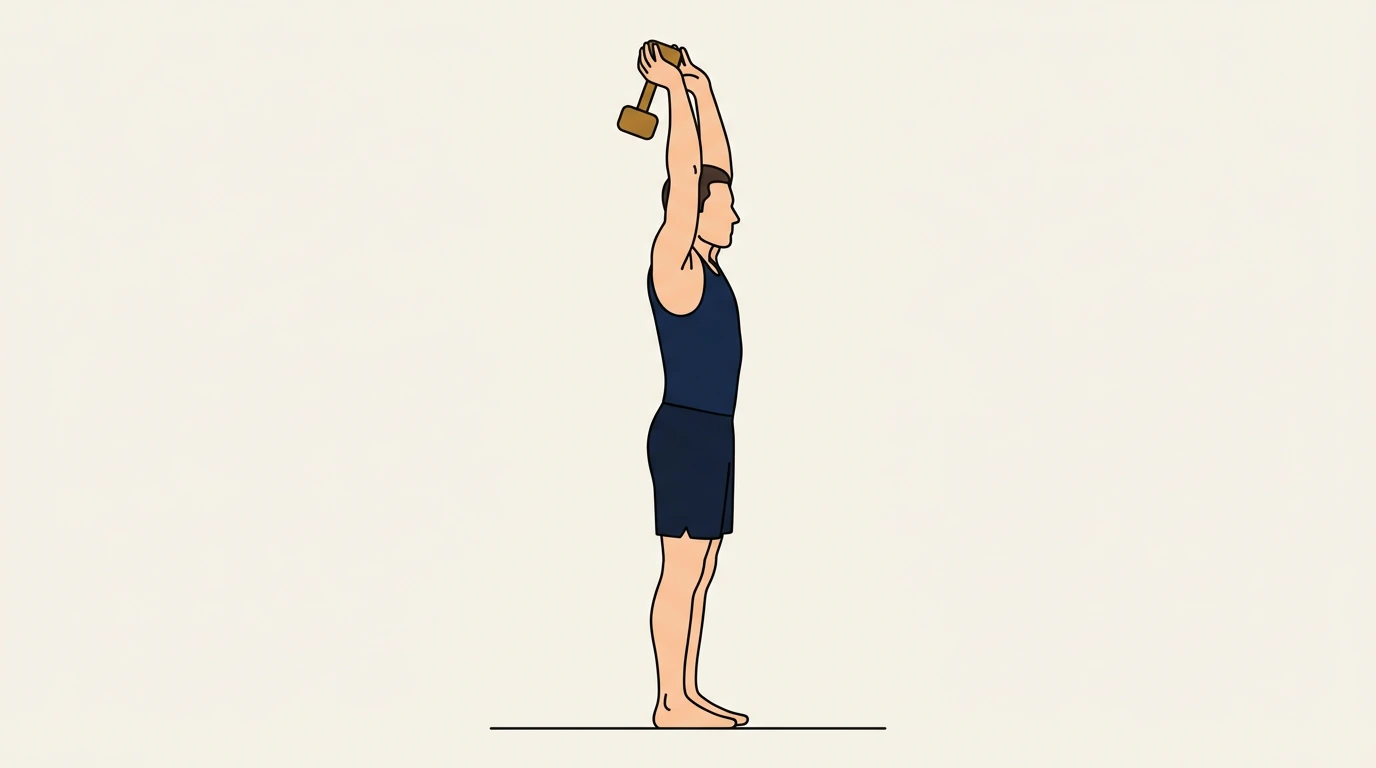
The overhead tricep extension
Setup and cues:
- Hold one dumbbell with both hands straight overhead.
- Bend your elbows to lower the weight behind your head.
- Keep your upper arms still and vertical - only the elbows move.
- Press back up and squeeze the triceps at the top.
The mistake everyone makes: Elbows drifting wide. They stay pointing up and close together.
Sets: 3 sets of 10-15 reps, rest 60 seconds.
Easier: Do it one arm at a time with a lighter weight.
Harder: Pause one second at the bottom of the movement.
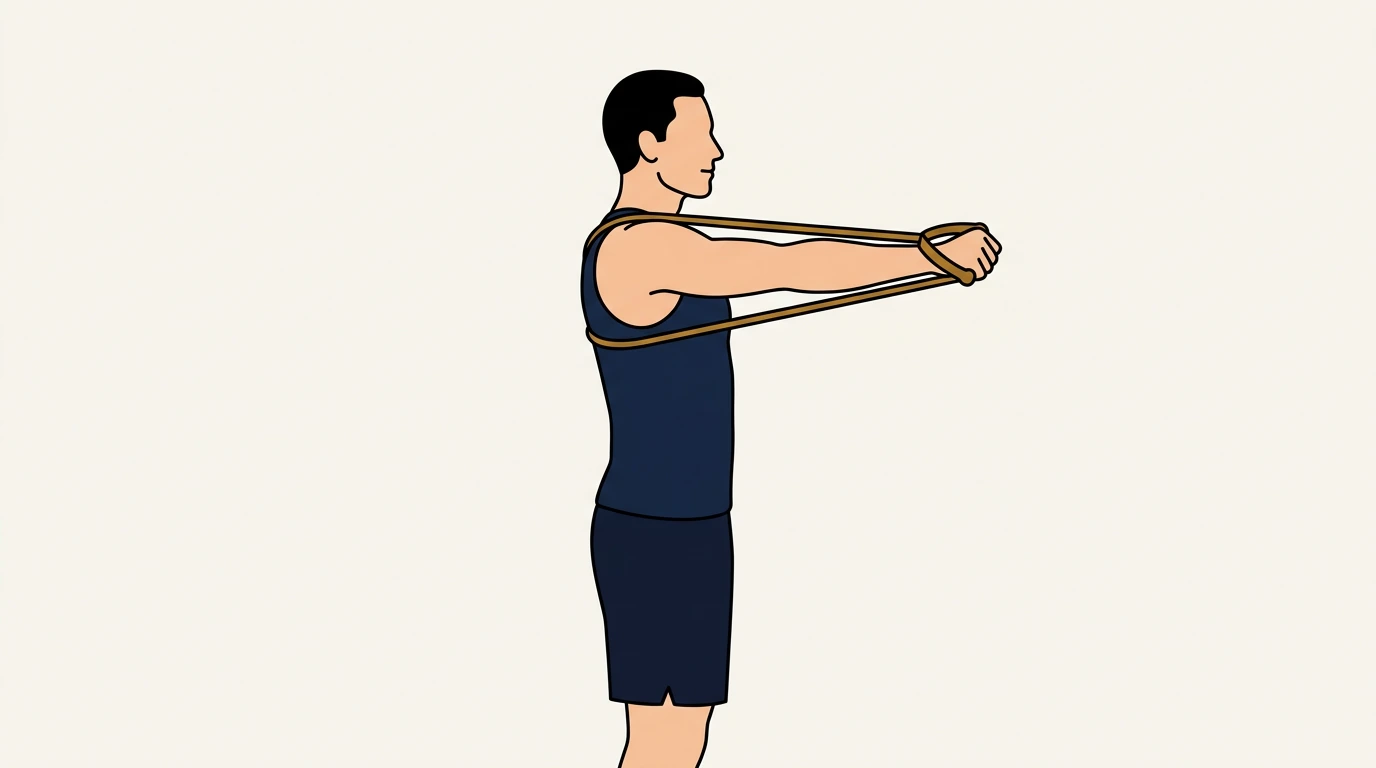
The band chest press
Setup and cues:
- Anchor the band at chest height behind you, one end in each hand.
- Step forward so the band is already slightly tight.
- Press your hands forward until your arms are straight.
- Return slowly, resisting the band the whole way.
The mistake everyone makes: Letting the band snap you back. The way back is half the exercise.
Sets: 3 sets of 10-15 reps, rest 60 seconds.
Easier: Step closer to the anchor so the band is slacker.
Harder: Step further away, or use a thicker band.
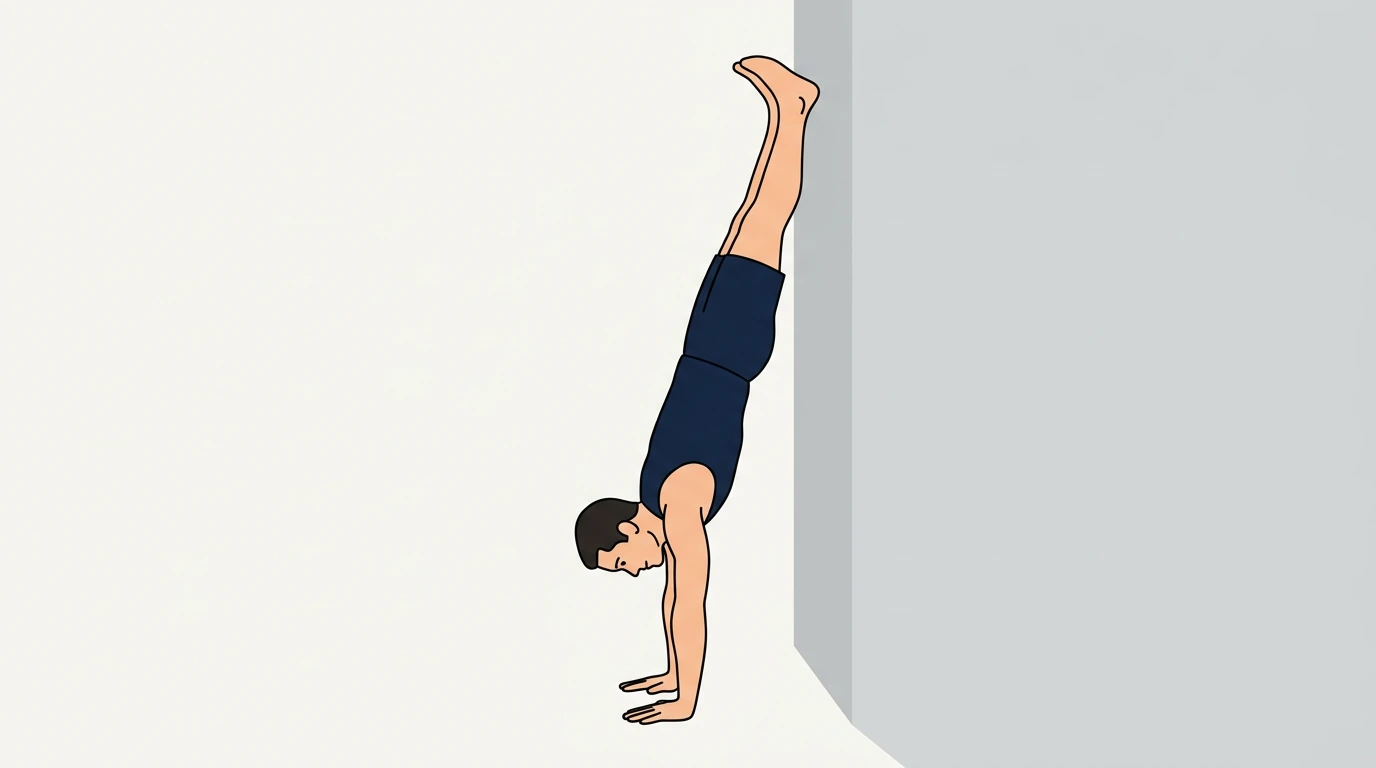
The wall handstand hold
Setup and cues:
- Place your hands a foot from the wall, shoulder-width.
- Walk your feet up the wall until your body is close to vertical.
- Push the floor away and squeeze your stomach.
- Breathe. Hold, then walk down with control.
The mistake everyone makes: Arching the lower back and letting the ribs lead. Tuck the ribs; think about a straight line from wrists to hips.
Sets: 3 holds of 10-30 seconds. Advanced: skip this until push-ups and pike push-ups feel easy.
Easier: pike push-ups on the floor build the same strength with far less risk.
Harder: Chest-to-wall handstands, or add small shoulder taps.
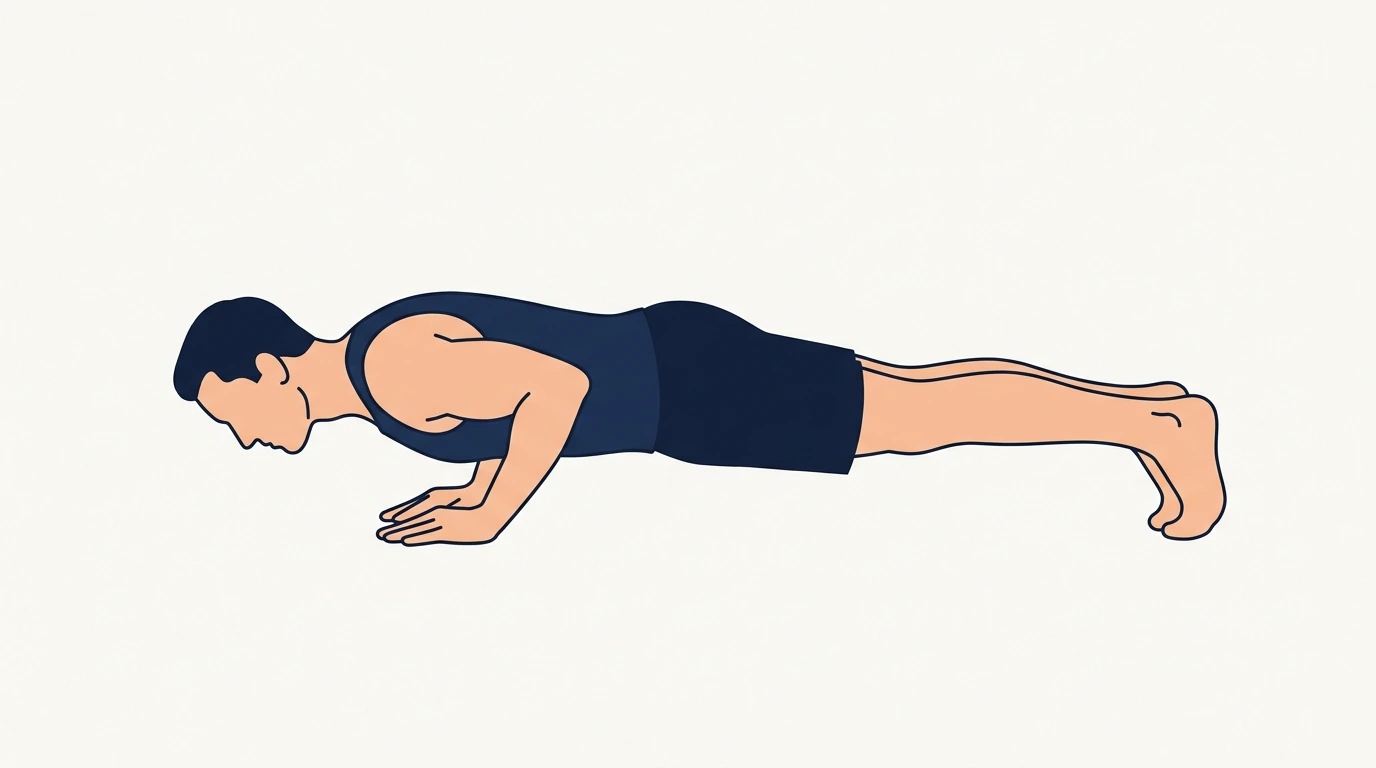
The diamond push-up
Setup and cues:
- Hands close together under your chest, thumbs and index fingers forming a diamond.
- Body one straight line, as with every push-up.
- Lower your chest to your hands, elbows brushing your ribs.
- Press up without letting the elbows flare out.
The mistake everyone makes: Hands too high, toward the face - that wrecks the wrists. The diamond sits under the sternum.
Sets: 3 sets of 4-10 reps, rest 60-90 seconds.
Easier: Do them from the knees first; keep the same diamond under the chest.
Harder: Feet on a step, or a slow three-second lowering.
The decline push-up
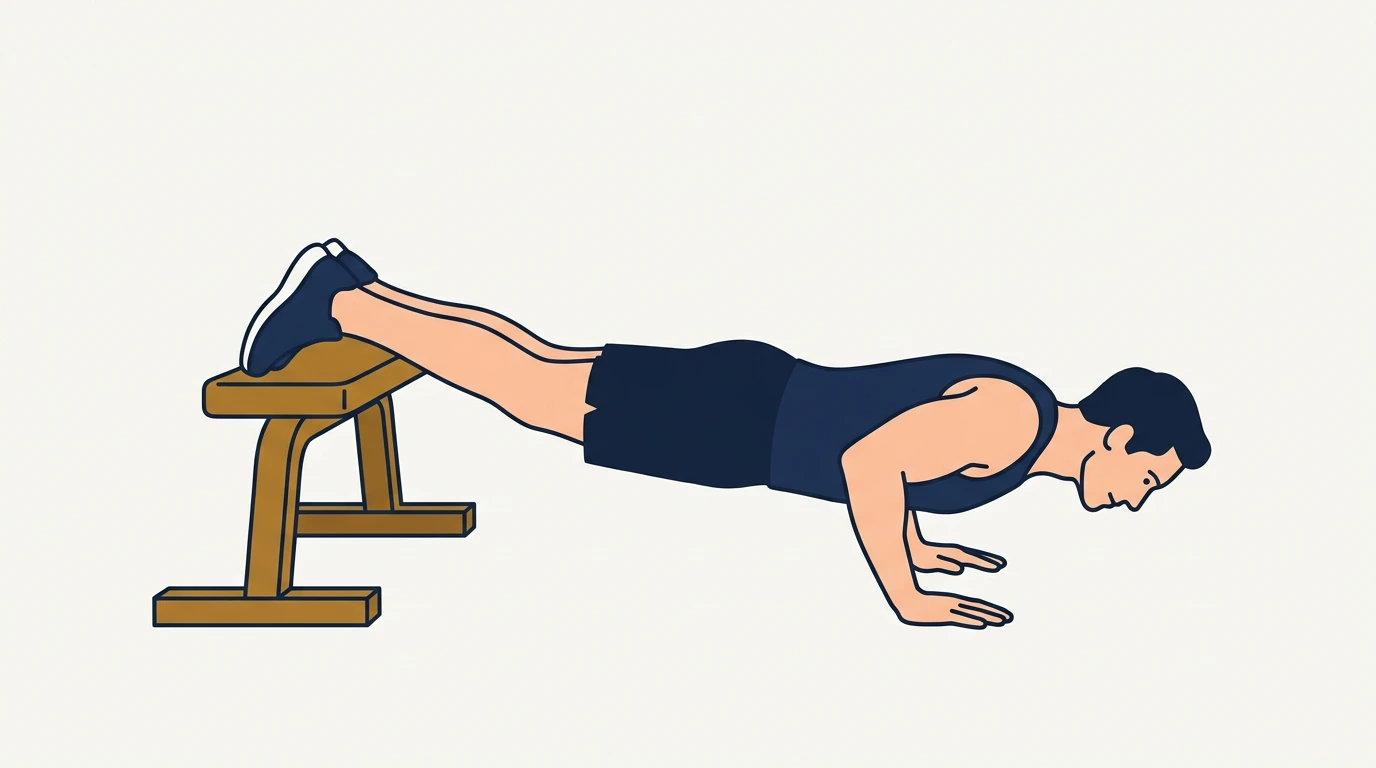
Setup and cues:
- Feet on the step, hands on the floor, body one straight line.
- The higher the feet, the more the shoulders work - start low.
- Lower your chest to just above the floor.
- Press up and keep the hips from sagging.
The mistake everyone makes: Feet too high too soon - past knee height this becomes a shoulder press with wrist strain. Low steps first.
Sets: 3 sets of 5-12 reps, rest 60-90 seconds.
Easier: A low step, or fewer reps than your floor push-ups.
Harder: Raise the feet, or add a slow lowering phase.
The band shoulder press
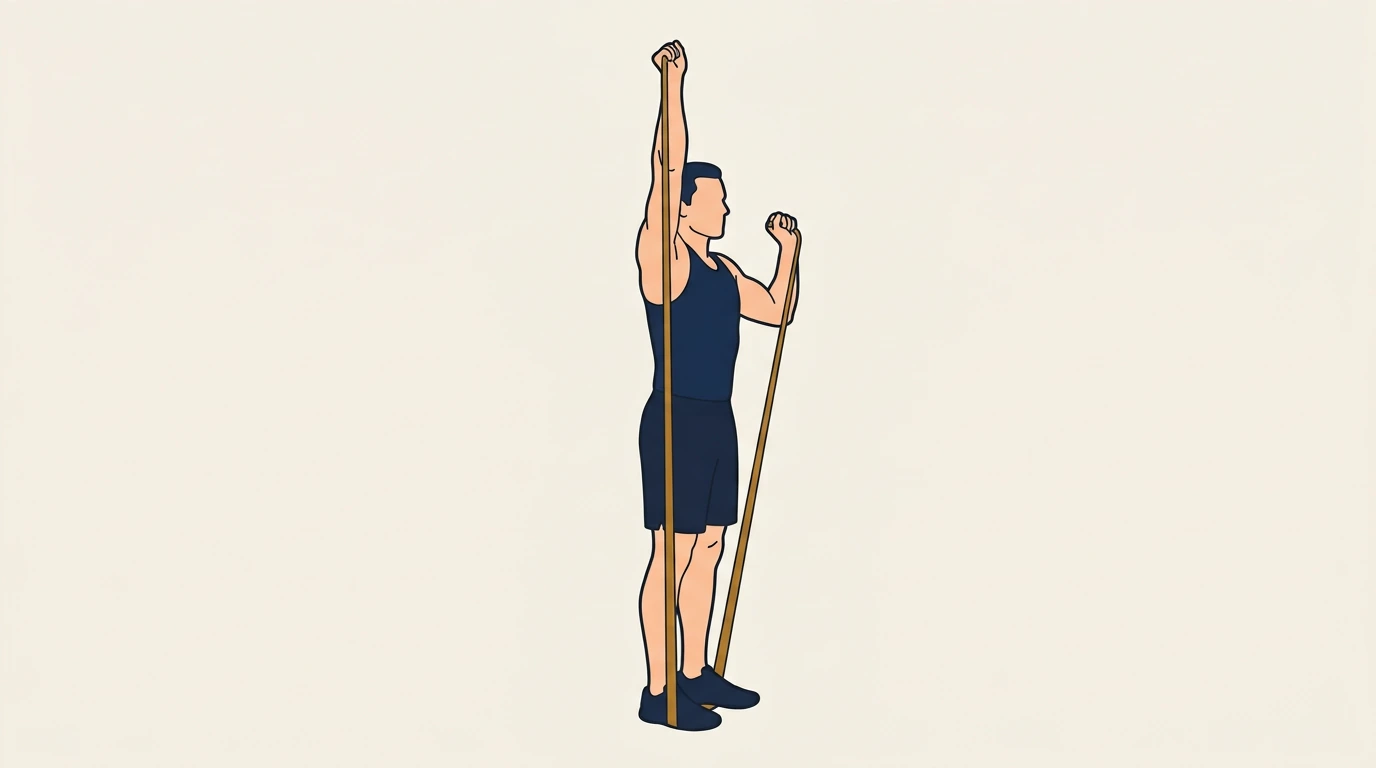
Setup and cues:
- Stand on the middle of the band, feet hip-width.
- Bring the ends to shoulder height, palms forward, elbows down.
- Press straight up until your arms are overhead.
- Lower slowly, resisting the band all the way down.
The mistake everyone makes: Leaning back to press. Ribs stay down; if you cannot stay tall, shorten the band.
Sets: 3 sets of 10-15 reps, rest 60-90 seconds.
Easier: Press one arm at a time, other hand anchoring the band at your shoulder.
Harder: Shorten the band under your feet for more tension.
The Arnold press
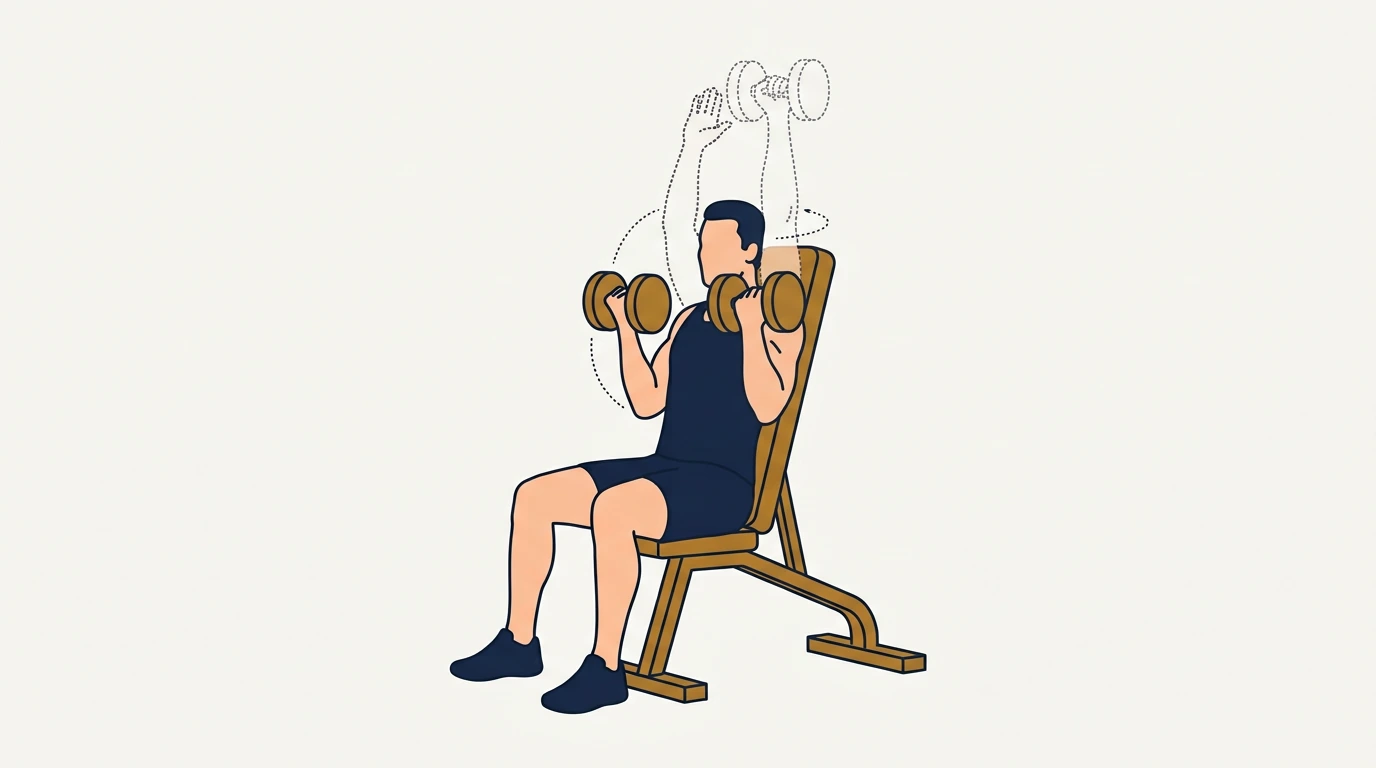
Setup and cues:
- Start with dumbbells at shoulder height, palms facing you.
- Press up while rotating your palms to face forward.
- Finish with arms overhead, palms forward.
- Reverse the rotation on the way down - a smooth circle.
The mistake everyone makes: Rushing the rotation. The turn is the exercise - half speed is full value.
Sets: 3 sets of 8-12 reps, rest 90 seconds. Lighter than a normal press.
Easier: Seated with a back support, one arm at a time.
Harder: A one-second pause at the top of each rep.
The dumbbell floor press
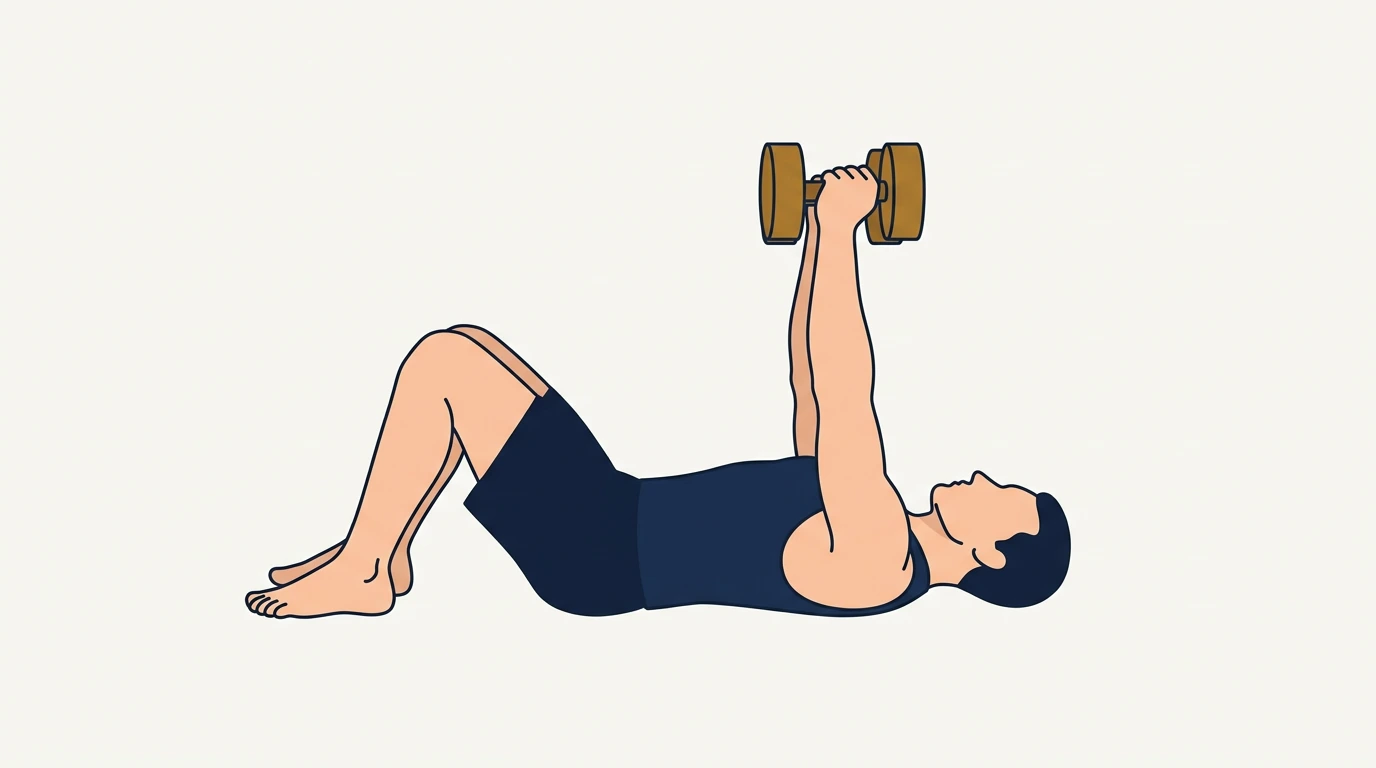
Setup and cues:
- Lie on your back on the floor, knees bent, dumbbells at your chest.
- Press the dumbbells up until your arms are straight.
- Lower until your upper arms gently touch the floor.
- Pause, then press again - the floor is your spotter.
The mistake everyone makes: Dropping the elbows hard onto the floor. Lower with control and let them kiss the ground.
Sets: 3 sets of 8-12 reps, rest 90 seconds.
Easier: One dumbbell, both hands.
Harder: A slow three-second lowering, or a pause on the floor each rep.
Form beats everything. Stop short of sharp pain, leave 1-2 reps in the tank, and add a rep or a little load when the top of the range feels easy two sessions running. Numbers on this page are approximate starting points, not medical advice.
Keep going
- Pull day, taught: 16 back and bicep moves
- Leg day, taught: 16 squat, lunge and hinge moves
- Core, taught: 14 ab and stability moves
- The workout builder - turn these moves into a weekly plan
- The one-rep max calculator - what your reps say about your strength
Sources
Keep going
Related on this desk.
General information, not medical advice. If you have a health condition, have been inactive for a long time, or something hurts sharply, talk to a qualified health professional first.